

Table of Contents
1. What is an E-commerce website?
An e-commerce website is a digital platform that allows businesses to sell products or services online, 24 hours a day, 7 days a week, from anywhere in the world.
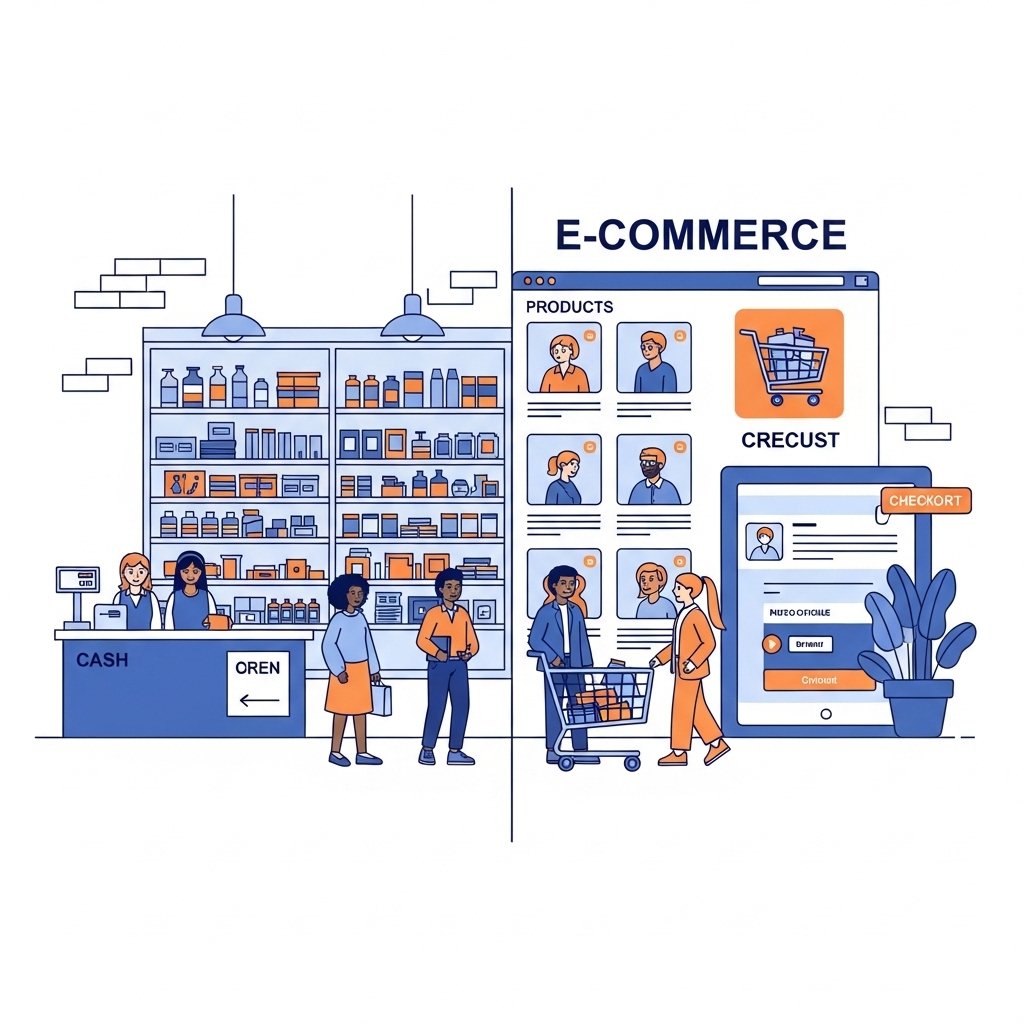
Think of it as your online storefront. Just like a physical shop has shelves, a billing counter, and a cash register, an e-commerce website has:
- Product pages (your shelves)
- Shopping cart (your basket)
- Checkout & payment gateway (your billing counter)
- Order management system (your backroom)
Whether you are selling physical goods, digital downloads, subscriptions, or services, an e-commerce website is the most powerful tool to grow your business in today’s digital economy.
💡 Fun Fact: Every minute, over $1.3 million is spent online globally. Without an ecommerce website, your business is missing out on this massive opportunity.
2. Types of E-commerce Business Models
Before building your e-commerce website, it is important to understand which business model fits your goals:
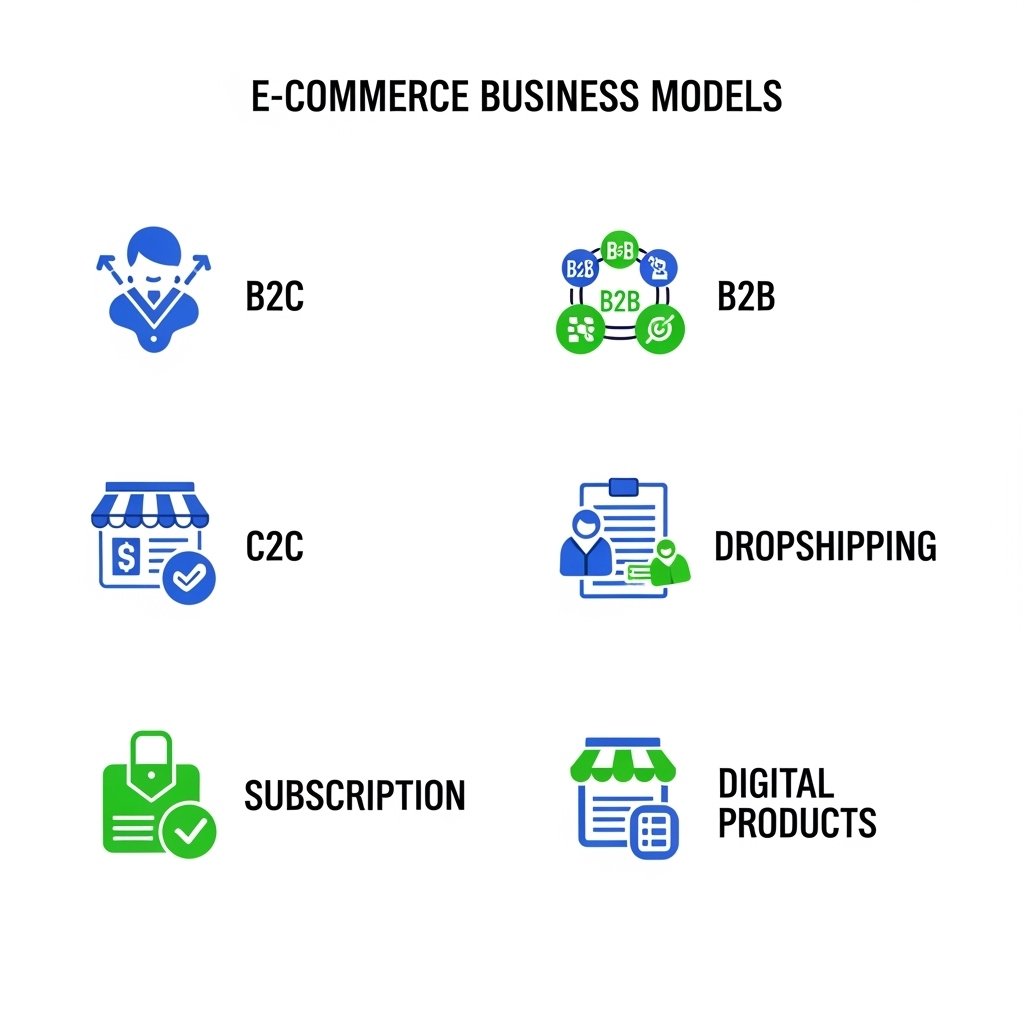
B2C — Business to Consumer
The most common model. A business sells directly to individual customers. Examples include Amazon, Daraz, and Nike’s online store.
B2B — Business to Business
Businesses sell products or services to other businesses. These often involve bulk orders and repeat purchases. Examples include Alibaba and Amazon Business.
C2C — Consumer to Consumer
Individual people sell to other individuals through an online marketplace. Examples include eBay, Etsy, and OLX.
Dropshipping
You sell products without holding inventory. When a customer places an order, the supplier ships directly to them. Low startup cost, high potential.
Wholesale / Private Label
You buy products in bulk or manufacture your own branded products and sell them through your website.
Subscription-Based
Customers pay a recurring fee to receive products or services regularly. Examples include meal kit delivery or software subscriptions.
Digital Products
You sell downloadable items like ebooks, courses, templates, software, or music. No shipping required — perfect for global sales.
3. How Big Is the E-commerce Market in 2026?
The e-commerce industry is not just growing; it is exploding.
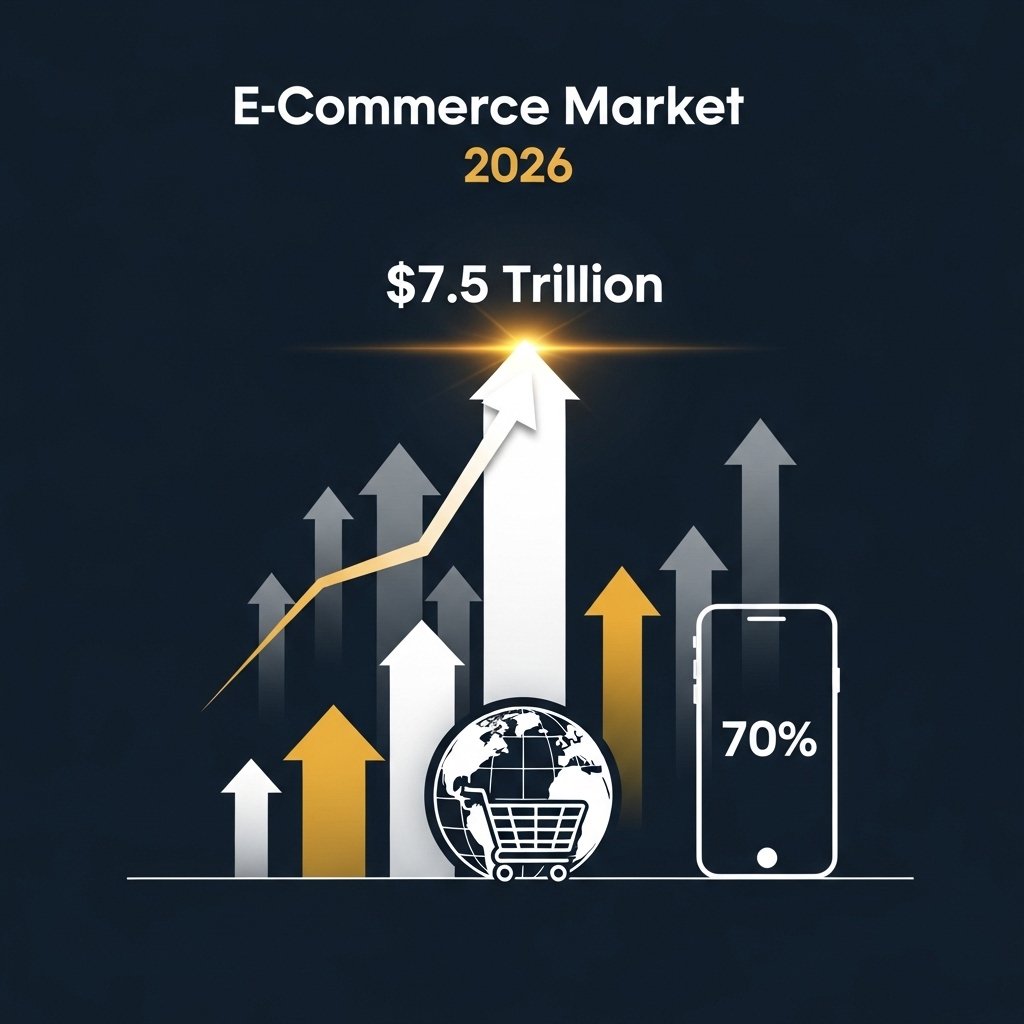
- Global e-commerce sales are on track to exceed $7.5 trillion in 2026
- Over 70% of e-commerce traffic comes from mobile devices
- There are more than 26 million e-commerce websites worldwide
- Pakistan’s e-commerce market is growing rapidly, with millions of new online shoppers every year
- Nearly 43% of e-commerce traffic comes from organic search (SEO)
These numbers make one thing clear: if your business does not have an e-commerce website, you are leaving serious money on the table.
4. Best E-commerce Platforms Compared
Choosing the right platform is the most important decision you will make. Here is a detailed comparison of the top e-commerce platforms in 2026:
Shopify — Best for Beginners & Growing Brands
Best for: Entrepreneurs, small to mid-size businesses, dropshippers
Shopify is the world’s leading e-commerce platform. It is easy to use, fast to set up, and comes with powerful built-in tools.
Pros:
- No coding skills required
- 70+ professional themes
- Built-in payment gateway
- 8,000+ apps in the app store
- Excellent mobile experience
- AI-powered tools for store design
Cons:
- Transaction fees if not using Shopify Payments
- Less flexible URL structure for SEO
- Monthly subscription + app costs can add up
Pricing: Starts at $29/month
WooCommerce — Best for WordPress Users & SEO-Focused Stores
Best for: Bloggers, content marketers, businesses wanting full control
WooCommerce is a free plugin that turns any WordPress website into a fully functional online store. It is the most flexible option available.
Pros:
- Completely free (pay only for hosting & plugins)
- Full control over SEO and URLs
- Best-in-class blogging platform
- Highly customizable
- No transaction fees
Cons:
- Requires WordPress knowledge
- You manage your own hosting and security
- Can become slow without proper optimization
Pricing: Free plugin; hosting from $5–$50/month
BigCommerce — Best for Large Catalogs & Enterprise
Best for: Mid-size to large businesses, B2B brands
BigCommerce is a powerful hosted platform with strong built-in features and superior SEO capabilities compared to Shopify.
Pros:
- No transaction fees on any plan
- Strong built-in SEO tools
- Supports 140+ currencies
- Integrates with Google Shopping, Amazon, Facebook
- Excellent for multi-channel selling
Cons:
- Fewer free themes
- Automatic plan upgrades when sales exceed limits
- Less beginner-friendly than Shopify
Pricing: Starts at $29/month
Other Notable Platforms
| Platform | Best For | Price |
|---|---|---|
| Wix eCommerce | Beginners, creative brands | From $17/month |
| Squarespace | Designers, artists, small brands | From $23/month |
| Magento / Adobe Commerce | Enterprise, full customization | Free + development cost |
| Sellfy | Digital products, small stores | From $22/month |
| PrestaShop | Open-source, custom development | Free + hosting |
Platform Comparison Summary
| Feature | Shopify | WooCommerce | BigCommerce |
|---|---|---|---|
| Ease of Use | ⭐⭐⭐⭐⭐ | ⭐⭐⭐ | ⭐⭐⭐⭐ |
| SEO Capability | ⭐⭐⭐⭐ | ⭐⭐⭐⭐⭐ | ⭐⭐⭐⭐⭐ |
| Customization | ⭐⭐⭐⭐ | ⭐⭐⭐⭐⭐ | ⭐⭐⭐⭐ |
| Scalability | ⭐⭐⭐⭐⭐ | ⭐⭐⭐⭐ | ⭐⭐⭐⭐⭐ |
| Cost (Long-term) | Medium | Low | Medium |
5. How to Build an E-commerce Website Step by Step
Building an e-commerce website does not have to be complicated. Follow these steps:
Step 1: Define Your Business Goals
Before touching a single design element, get clear on:
- What products or services will you sell?
- Who is your target audience?
- What are your revenue goals?
- How many products will you list?
Create a simple one-page business brief with your sales targets, competitor analysis, and launch timeline.
Step 2: Choose Your Platform
Based on your needs, budget, and technical skills, select the platform that fits best (see comparison above).
Step 3: Get a Domain Name & Hosting
Your domain name is your website address (e.g., www.yourstore.com). Tips for choosing a domain:
- Keep it short and memorable
- Use your brand name
- Use .com for global reach or .pk for Pakistan
- Avoid numbers and hyphens
Step 4: Choose a Professional Theme / Template
Your theme is the visual design of your store. Look for themes that are:
- Mobile-responsive
- Fast-loading
- Professional and clean
- Easy to customize
Step 5: Set Up Your Product Pages
Each product page should include:
- High-quality product images (multiple angles)
- Clear, keyword-rich product title
- Detailed product description
- Price, variants (size, color), and stock status
- Customer reviews section
- Clear “Add to Cart” button
Step 6: Set Up Payment Gateways
Integrate trusted payment options so customers can pay easily and securely.

Step 7: Configure Shipping & Taxes
Set up your shipping zones, rates, and tax rules based on your target markets.
Step 8: Optimize for SEO
Before launching, make sure your store is set up for search engine visibility.
Step 9: Test Everything
- Test on mobile, tablet, and desktop
- Complete at least 5 test transactions
- Check all automated emails (order confirmation, shipping updates)
- Test site speed with Google PageSpeed Insights (aim for 90+ score)
Step 10: Launch & Market Your Store
Go live and start driving traffic through SEO, social media, paid ads, and email marketing.
6. Must-Have Features of a Successful E-commerce Website
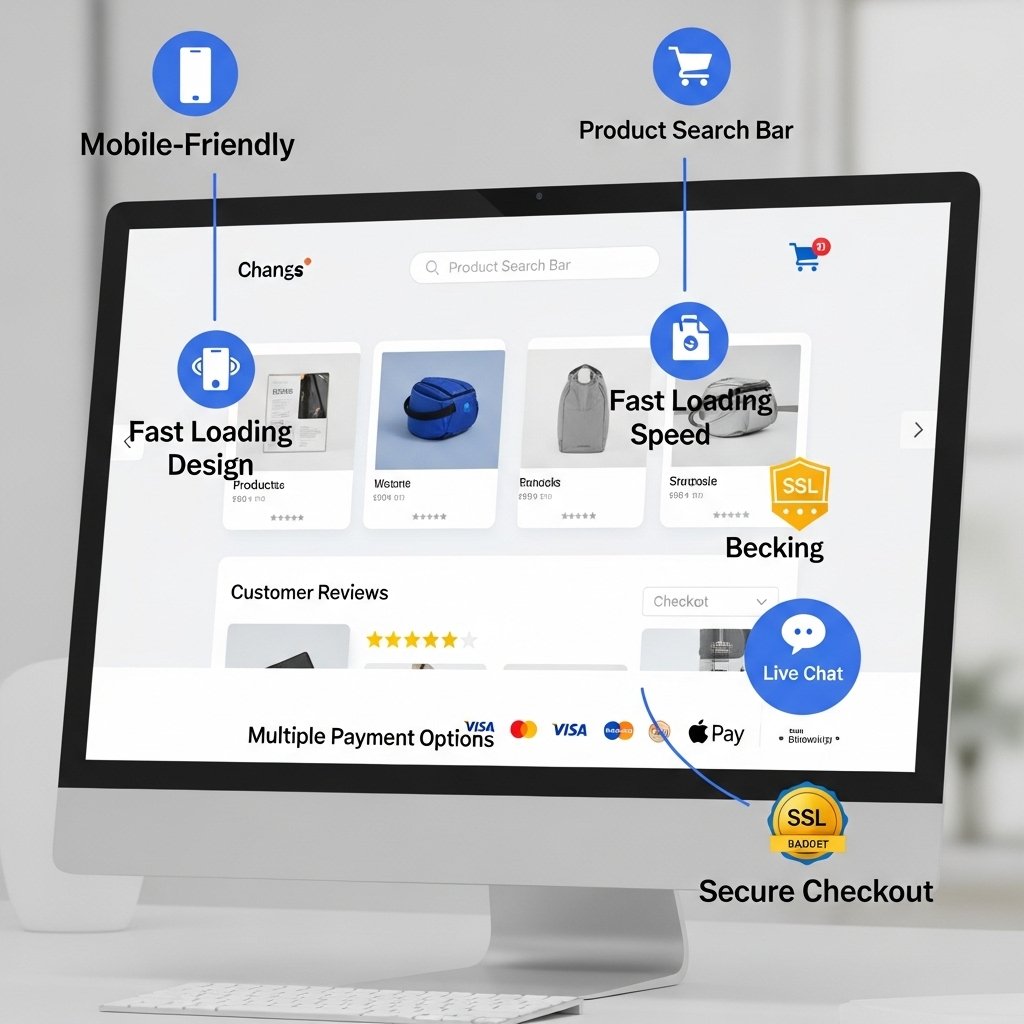
In 2026, a basic website will no longer be enough. Here are the essential features your e-commerce store must have:
Mobile-First Design
Over 70% of shoppers browse on smartphones. Your website must look perfect and load fast on every mobile device. If your site takes more than 2 seconds to load on a phone, you have already lost the sale.
Fast Loading Speed
Speed is everything in e-commerce. Even a 1-second delay in page load time can reduce conversions by 7%. Optimize images, use a CDN, and choose quality hosting.
Secure Checkout (SSL Certificate)
Customers will not enter their payment details on a website that is not secure. An SSL certificate (the padlock icon in the browser) is non-negotiable.
Easy Navigation
Shoppers should find what they are looking for in 3 clicks or fewer. Use clear categories, filters, and a powerful search bar.
High-Quality Product Images & Videos
Customers cannot touch your products online. Great images and product videos are your best sales tool. Include multiple angles, zoom functionality, and lifestyle shots.
Shopping Cart & Wishlist
An easy-to-use cart and wishlist feature keeps shoppers engaged and encourages return visits.
Multiple Payment Options
In 2026, customers expect to pay with credit/debit cards, digital wallets (Apple Pay, Google Pay), PayPal, Buy Now Pay Later (BNPL), and cash on delivery.
Customer Reviews & Ratings
92% of shoppers read reviews before buying. Reviews build trust and directly impact your conversion rate.
Live Chat & Customer Support
Instant support reduces cart abandonment. AI-powered chatbots can handle common questions 24/7.
Order Tracking
Customers want to know exactly where their order is. Real-time tracking builds confidence and reduces support requests.
Email Marketing Integration
Capture emails at checkout and send abandoned cart reminders, promotions, and order updates.
AI-Powered Personalization
Modern ecommerce stores use AI to show personalized product recommendations, improving average order value and customer satisfaction.
7. E-commerce Website Design Tips
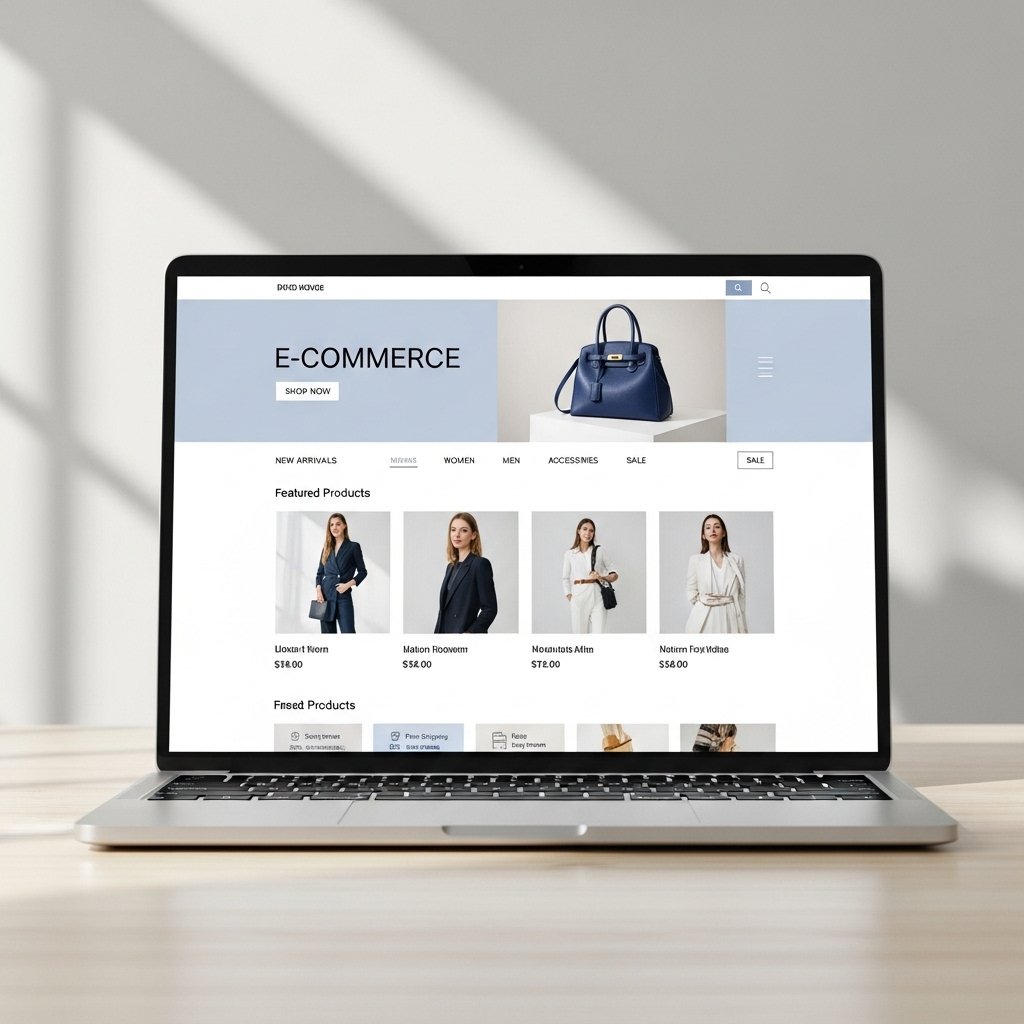
Your website design is your first impression, and first impressions happen in milliseconds.
Design Principles That Convert
Keep It Clean and Simple: Less is more. A clutter-free design keeps customers focused on your products. Use white space generously and avoid overwhelming visitors with too many elements.
Use Professional Branding: Consistent colors, fonts, and logo across your website and social media channels, build brand recognition and trust.
Make Your CTA (Call-to-Action) Obvious: Your “Buy Now,” “Add to Cart,” and “Shop Now” buttons should stand out visually. Use contrasting colors and clear, action-oriented text.
Use High-Resolution Images: Blurry or pixelated images destroy trust instantly. Invest in professional product photography or AI-generated product images.
Design for Trust: Add trust signals throughout your website: security badges, money-back guarantee seals, return policy links, and customer testimonials.
Optimize Your Homepage: Your homepage should immediately answer: Who are you? What do you sell? Why should I trust you? Use a strong hero banner, featured products, and clear navigation.
8. E-commerce SEO: How to Rank on Google
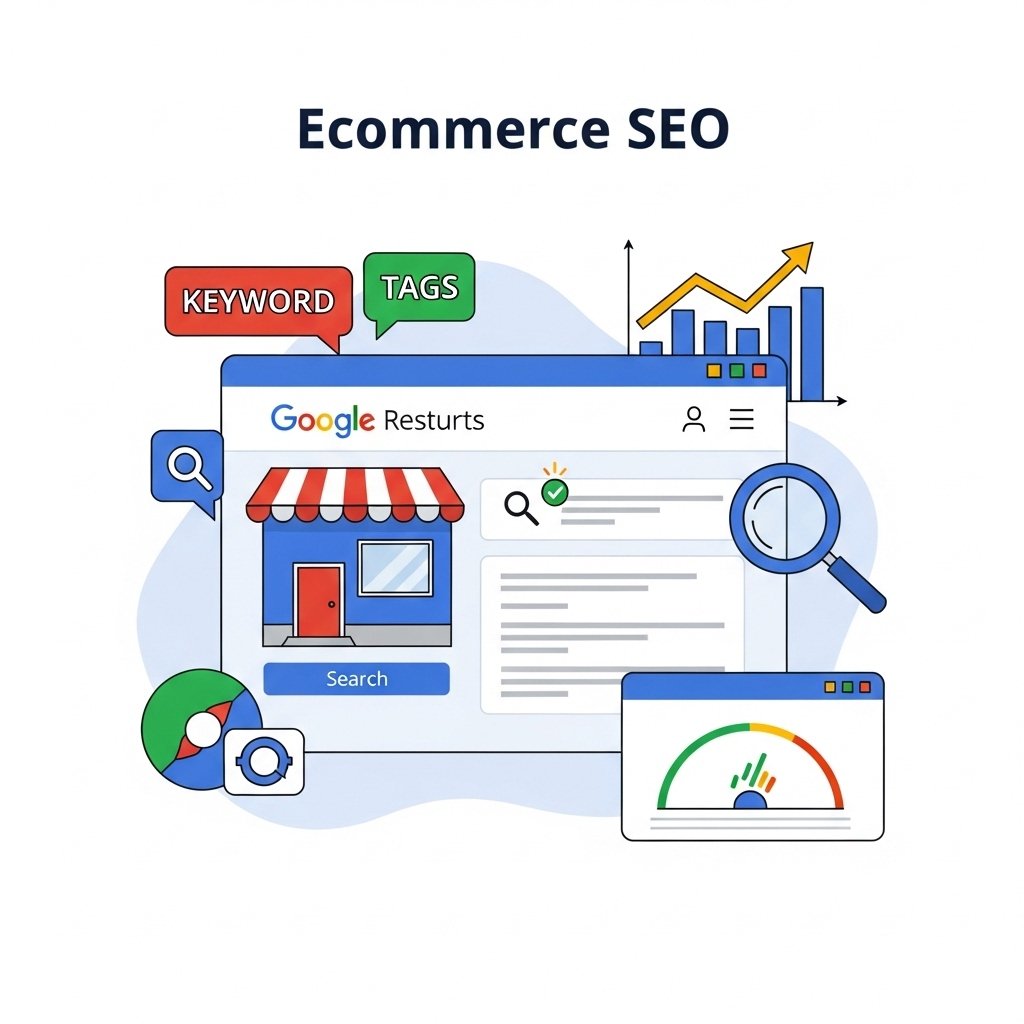
Nearly 43% of all ecommerce traffic comes from organic search. This means SEO is one of the highest-ROI investments you can make for your online store.
Keyword Research for Ecommerce
Start by targeting keywords your customers actually search for:
- Product keywords: “buy running shoes online,” “leather wallet for men”
- Category keywords: “women’s dresses Pakistan,” “gaming laptops”
- Informational keywords: “how to choose the right laptop,” “best ecommerce platform for beginners”
- Long-tail keywords: More specific, lower competition, higher intent
On-Page SEO for Product Pages
- Write unique, keyword-rich product titles and descriptions
- Optimize image file names and alt text
- Use H1 for product name, H2 for key features
- Add structured data markup (Product schema) for rich snippets in Google
Technical SEO Essentials
- Make your website mobile-friendly
- Improve page loading speed (compress images, use CDN)
- Create an XML sitemap and submit it to Google Search Console
- Fix broken links and redirect errors
- Use clean, SEO-friendly URLs (e.g., /products/mens-leather-wallet)
Content Marketing for Ecommerce
Create blog posts around topics your customers search for:
- Buying guides: “How to Choose the Best Gaming Laptop in 2026”
- Comparison articles: “Shopify vs WooCommerce: Which Is Better?”
- How-to tutorials: “How to Set Up Your First Online Store”
- Trend roundups: “Top 10 Fashion Trends for Summer 2026”
Local SEO (For Pakistan-Based Businesses)
- Create and optimize your Google Business Profile
- Target location-based keywords (“ecommerce website development Lahore”)
- List your business in local directories
- Encourage customers to leave Google reviews
Link Building
Quality backlinks from reputable websites remain one of Google’s strongest ranking signals. Earn links through:
- Guest blogging on industry sites
- Creating shareable, data-driven content
- Getting featured in online publications
9. Payment Gateways for Ecommerce
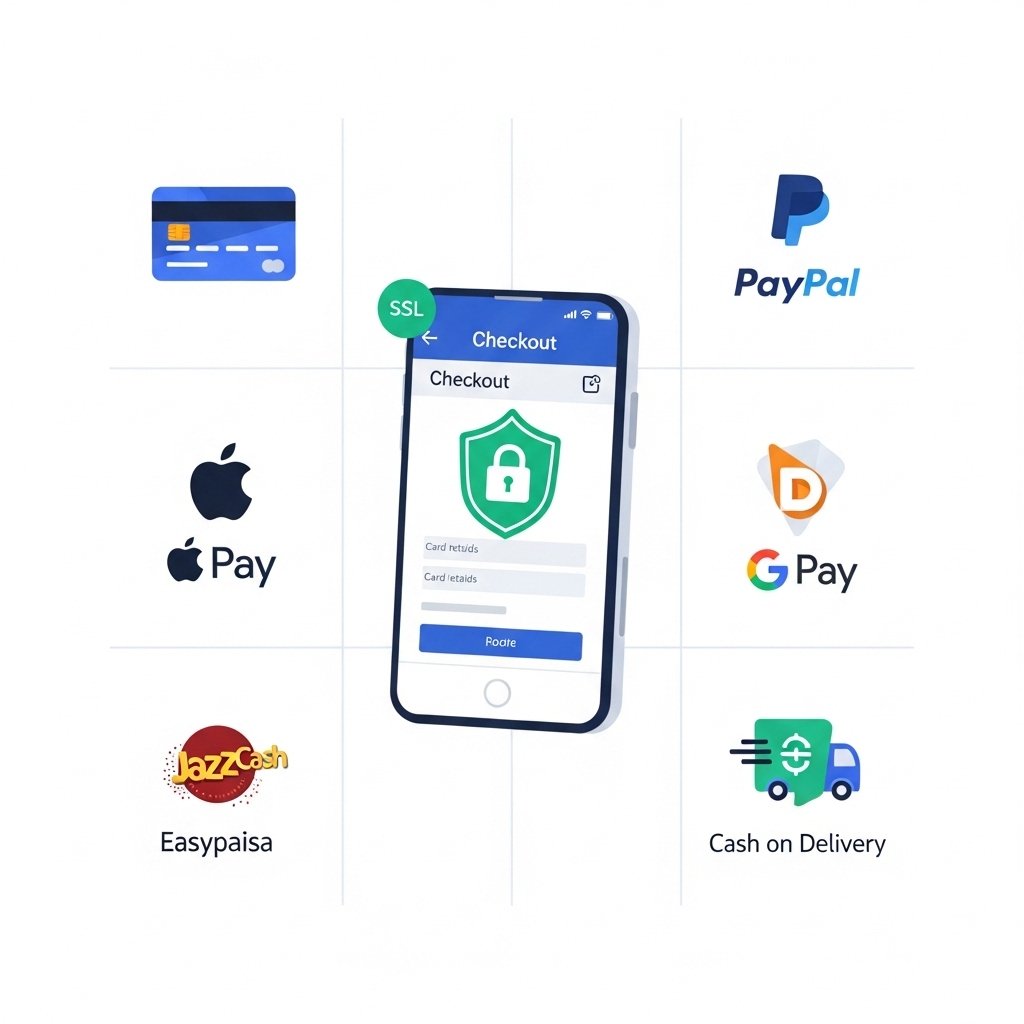
A payment gateway is the technology that processes online transactions securely. Choosing the right one is critical.
Global Payment Gateways
- Stripe — Most developer-friendly; excellent for international stores
- PayPal — Trusted by millions; great for global buyers
- Apple Pay & Google Pay — One-click mobile payments
- Klarna / Afterpay — Buy Now, Pay Later (BNPL) — growing rapidly
Payment Gateways for Pakistan
- JazzCash — Most widely used mobile wallet in Pakistan
- Easypaisa — Strong user base in Pakistan
- HBL Pay / Meezan Bank — Bank-integrated options
- 2Checkout (Verifone) — Accepts international credit cards for Pakistani businesses
- Cash on Delivery (COD) — Still the most trusted payment method in Pakistan
PCI DSS Compliance
Any ecommerce website handling payment data must comply with Payment Card Industry Data Security Standards. This protects your customers and your business from fraud.
10. Ecommerce Website Cost Breakdown
How much does it cost to build an ecommerce website? The answer depends on your approach:
Option 1: DIY with a Platform (Lowest Cost)
| Item | Monthly Cost |
|---|---|
| Shopify Basic Plan | $29 |
| Domain Name | ~$1–2/month |
| Premium Theme (one-time) | $50–$350 |
| Essential Apps | $20–$100/month |
| Total | ~$60–$200/month |
Option 2: WordPress + WooCommerce
| Item | Cost |
|---|---|
| Hosting (quality) | $10–$50/month |
| Domain | $10–15/year |
| Premium Theme | $50–$150 (one-time) |
| Plugins | $0–$200/year |
| Total | ~$15–$80/month |
Option 3: Custom Development (Best Results)
| Item | Cost |
|---|---|
| Design & Development | $1,500–$15,000+ |
| Hosting | $20–$200/month |
| Maintenance | $100–$500/month |
| Total | Varies by scope |
💡 Pro Tip: For Pakistani businesses, WooCommerce with good local hosting (like Navicosoft or RapidSeedbox Pakistan) offers the best balance of cost and performance.
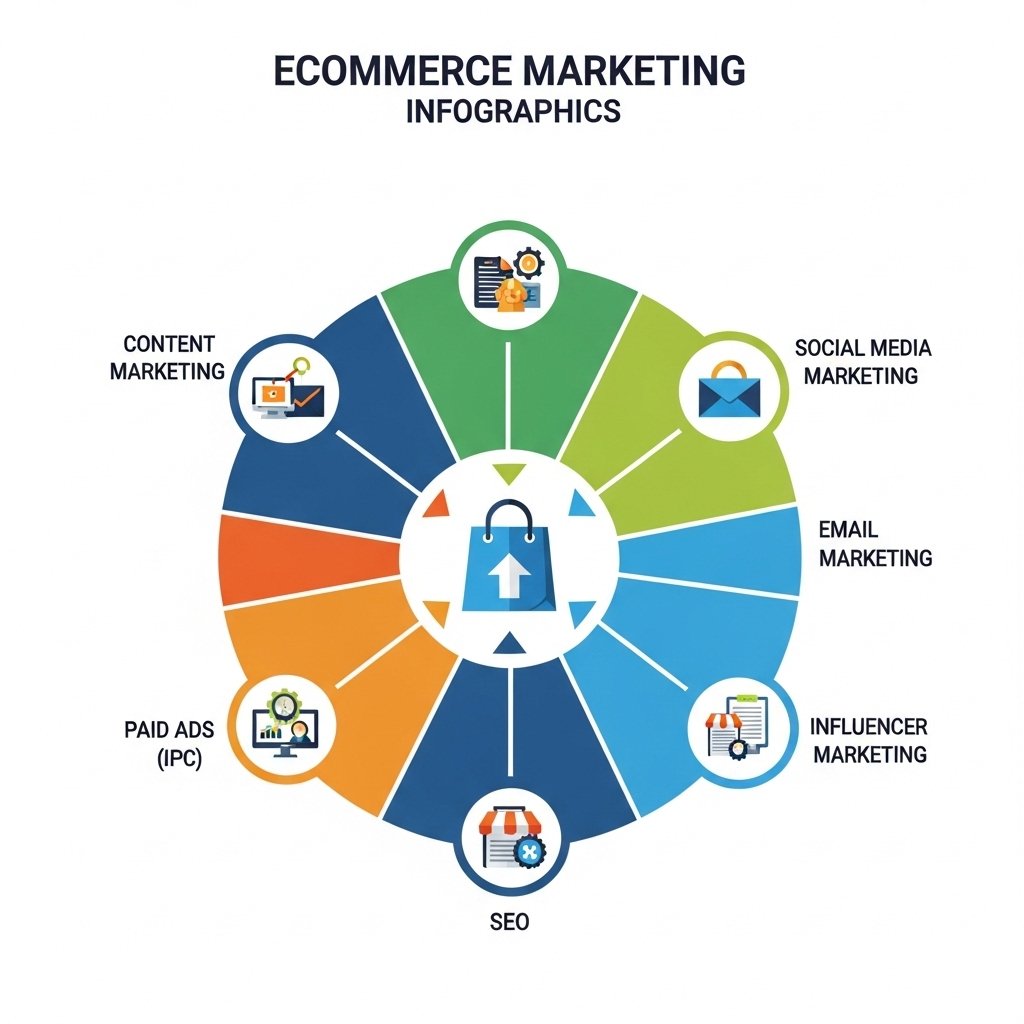
11. How to Market Your E-commerce Store
Building your store is just the beginning. Here is how to drive consistent traffic and sales:
Search Engine Optimization (SEO)
As covered above, SEO drives free, long-term, high-intent traffic to your store. It takes time but delivers the highest ROI over time.
Social Media Marketing
Platforms like Instagram, Facebook, TikTok, and Pinterest are powerful sales channels for e-commerce. In 2026, social commerce, where customers discover and buy products directly within social apps, is booming.
Paid Advertising (PPC)
Google Shopping Ads and Meta (Facebook/Instagram) Ads can drive immediate traffic to your store. Start with a small budget, test your ads, and scale what works.
Email Marketing
Email marketing has one of the highest ROI of any digital marketing channel. Build your email list from day one and send:
- Welcome series for new subscribers
- Abandoned cart reminders
- Flash sale announcements
- Post-purchase follow-ups
Influencer Marketing
Partner with influencers in your niche to reach new audiences. Micro-influencers (10,000–100,000 followers) often deliver better engagement and ROI than mega-influencers.
Content Marketing
Regular blog posts, videos, and guides attract organic traffic, build trust, and position your brand as an authority.
WhatsApp Marketing (Pakistan-Specific)
WhatsApp is one of the most powerful marketing tools in Pakistan. Use WhatsApp Business to send product catalogs, promotions, and order updates directly to customers.
12. Common Ecommerce Mistakes to Avoid
Even experienced entrepreneurs make these costly mistakes:
Choosing the wrong platform — Match your platform to your technical skills and business needs.
Ignoring mobile optimization — Over 70% of shoppers use smartphones. A poor mobile experience kills sales.
Slow loading speed — Every extra second costs you customers and Google rankings.
Poor product photography — Bad images = zero sales. Invest in quality visuals.
Complicated checkout process — Every extra step in checkout loses customers. Keep it as simple as possible.
No trust signals — Without reviews, security badges, and a clear return policy, customers will not buy.
Ignoring SEO from day one — SEO takes time. Start optimizing immediately, not after launch.
No email list building — Your email list is your most valuable marketing asset. Start building it on day one.
Not tracking analytics — Without data, you are flying blind. Install Google Analytics and track everything.
No clear return policy — A transparent return policy actually increases sales by reducing purchase anxiety.
13. Ecommerce Trends to Watch in 2026
The ecommerce landscape is evolving fast. Here are the trends shaping online retail in 2026:
AI-Powered Personalization
Ecommerce stores are using artificial intelligence to deliver personalized product recommendations, dynamic pricing, and customized shopping experiences for each visitor.
Social Commerce
TikTok Shop, Instagram Shopping, and Pinterest Shopping have collapsed the traditional sales funnel. Discovery and checkout now happen in the same place, directly within social media apps.
Voice Search Shopping
With the rise of smart speakers and mobile voice assistants, more shoppers are using voice commands to search for and purchase products. Optimizing your product titles for voice search is becoming essential.
AR / VR Shopping Experiences
Augmented reality lets shoppers virtually try on clothes, visualize furniture in their homes, or see how a product looks before buying.
Buy Now, Pay Later (BNPL)
BNPL options like Klarna, Afterpay, and Affirm are now expected by shoppers. They increase average order values and reduce cart abandonment.
Sustainable & Ethical Commerce
Consumers in 2026 actively seek brands that prioritize sustainability, ethical sourcing, and eco-friendly packaging.
Headless Commerce
Headless ecommerce separates the front-end (what customers see) from the back-end (inventory, orders, payments). This allows for faster, more flexible, and highly customized shopping experiences.
Same-Day & Hyper-Fast Delivery
Customer expectations around delivery speed continue to rise. Fast fulfillment is now a competitive advantage.

14. Why Hire a Professional Ecommerce Agency?
You can build an ecommerce website yourself — but should you? Here is why working with a professional agency gives you a major advantage:
Save Time and Launch Faster
A professional agency has done this hundreds of times. They know every pitfall to avoid and can launch your store faster than you could on your own.
Expert Design That Converts
Good design is not just about looking pretty. An experienced ecommerce team knows exactly how to design pages that turn visitors into buyers.
Technical SEO from Day One
Agencies build your store with SEO best practices baked in from the start, clean code, fast loading, proper URL structures, and schema markup.
Custom Functionality
Need a custom product configurator, multi-vendor marketplace, or unique checkout experience? A development agency can build it for you.
Ongoing Support & Maintenance
Your ecommerce store needs regular updates, security patches, and performance optimization. An agency provides this ongoing support so you can focus on running your business.
Digital Marketing Integration
The best agencies do not just build your website, they help you drive traffic to it with SEO, social media, paid ads, and content marketing.

15. Frequently Asked Questions
Q: How long does it take to build an ecommerce website?
A basic store on Shopify or WooCommerce can be set up in 1–2 weeks. A custom-built ecommerce website typically takes 4–12 weeks depending on complexity and features.
Q: Do I need coding skills to build an ecommerce website?
Not necessarily. Platforms like Shopify and Wix allow you to build a fully functional store without writing a single line of code. However, for a unique, high-performance store, working with a developer is recommended.
Q: What is the best ecommerce platform for beginners?
Shopify is widely considered the best platform for beginners due to its ease of use, excellent support, and powerful built-in features.
Q: What is the best ecommerce platform for SEO?
WooCommerce (on WordPress) offers the most SEO flexibility and control. BigCommerce comes in a close second with its strong built-in SEO tools.
Q: How do I accept payments in Pakistan?
You can use JazzCash, Easypaisa, bank transfers, or international gateways like Stripe and 2Checkout for Pakistani ecommerce businesses. Cash on Delivery (COD) remains the most popular payment method in Pakistan.
Q: How much does ecommerce website development cost in Pakistan?
A basic WooCommerce store costs between PKR 50,000–150,000. A premium custom ecommerce website can range from PKR 200,000 to PKR 1,000,000+ depending on features and design complexity.
Q: How do I drive traffic to my new ecommerce store?
The best strategy combines SEO (for long-term organic traffic), social media marketing, paid advertising (Google Ads, Facebook Ads), email marketing, and content marketing.
Q: Is it safe to shop on ecommerce websites? Yes, as long as the website has an SSL certificate (look for HTTPS in the URL), uses trusted payment gateways, and has clear privacy and return policies.
Final Thoughts
Building a successful ecommerce website in 2026 is about much more than just listing products online. It requires the right platform, a conversion-focused design, technical SEO, fast loading speeds, secure payments, and a smart marketing strategy working together.
Whether you are a startup launching your first product or an established business looking to scale online, the opportunity has never been greater. Global ecommerce is a multi-trillion dollar industry — and your share of it starts with building the right website.
Ready to launch your ecommerce store? Our team specializes in building high-performance ecommerce websites that are fast, SEO-optimized, and designed to convert visitors into customers.
Contact Us Today for a Free Consultation and let us help you build an ecommerce website that drives real results.
This guide is written and maintained by [ZNT Soutions] — a leading digital marketing and web development agency helping businesses grow online through SEO, web development, social media marketing, and AI-powered content creation.