

Table of Contents
1. Why Every Doctor and Clinic Needs a Professional Website?
In 2026, patients no longer rely on word of mouth alone to find a doctor. Before booking any appointment, they search online, reading reviews, checking qualifications, exploring services, and comparing clinics from the comfort of their home or smartphone.
If your clinic does not have a professional, fast, and SEO-optimized website, you are invisible to these patients. And in healthcare, invisibility means empty appointment slots.
Consider these eye-opening numbers:
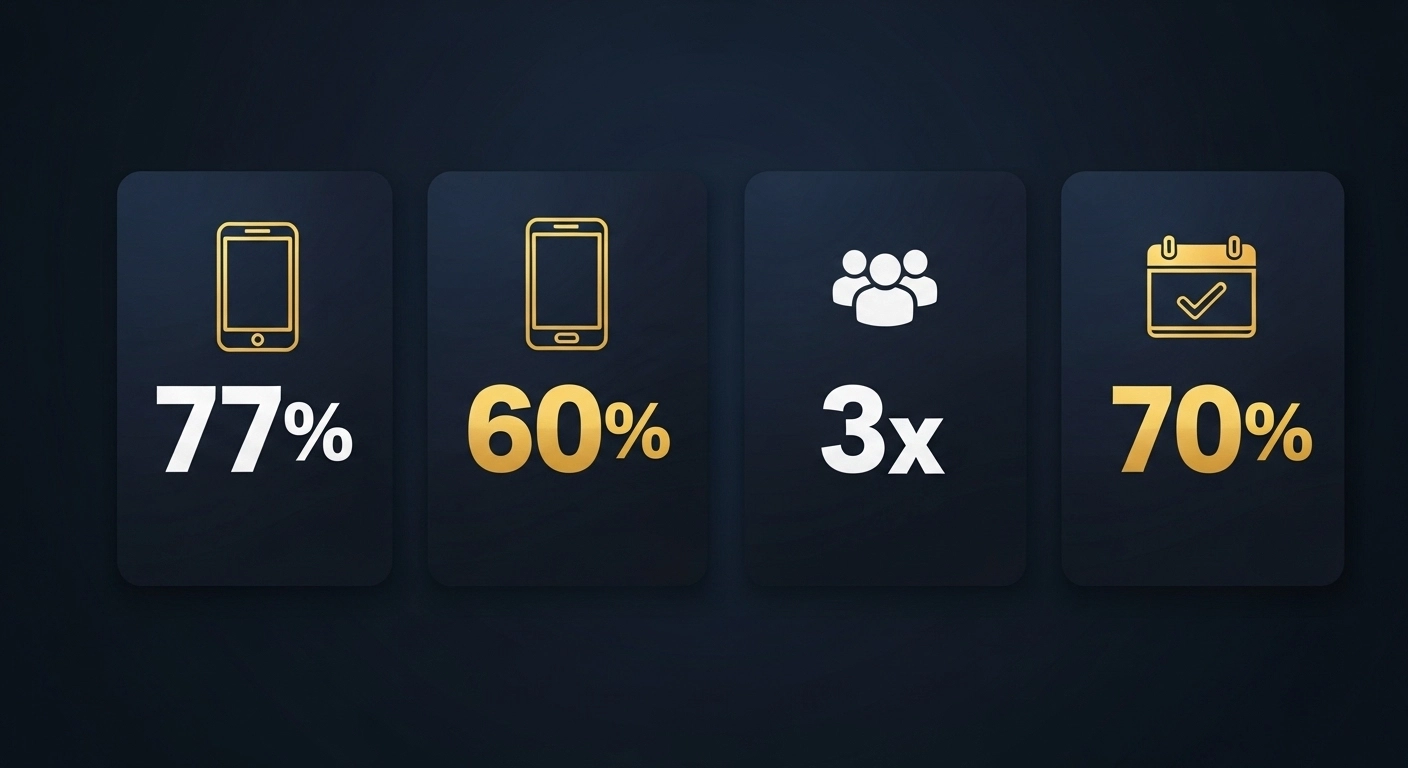
- Over 77% of patients begin their healthcare journey with an online search before booking an appointment
- Over 60% of patients search for doctors on their phones, making mobile optimization absolutely critical for any medical practice
- Clinics with professional websites generate 3x more new patient inquiries than those without an online presence
- Over 77% of patients begin their healthcare journey through a search engine, they are not asking friends or flipping through directories, they are searching right now on their phone with the intent to book
- With over 70% of patient appointments starting online, optimizing your website is not optional, it is critical
A professionally developed doctor and clinic website is not just a digital business card. It is your round-the-clock patient acquisition tool, your credibility builder, and your most powerful practice growth asset, all in one.
💡 Key Insight: In 2026, patients compare multiple clinics online before making a decision. If your website looks outdated, loads slowly, or is difficult to navigate, they will book with another doctor, even if your qualifications and experience are superior.
2. What Is a Doctor and Clinic Website?
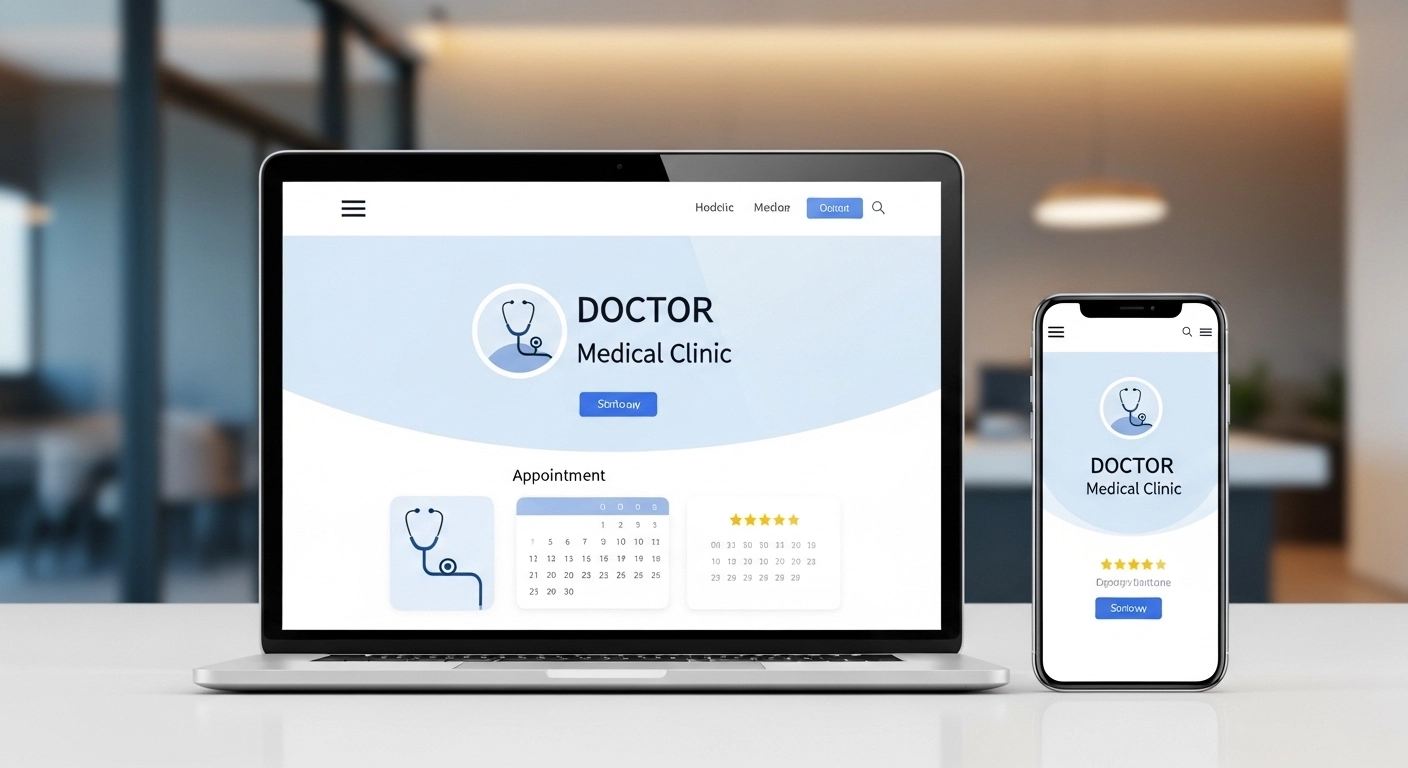
A doctor and clinic website is a professionally designed digital platform that showcases your medical practice, services, specialist doctors, and credentials, and allows patients to learn about your clinic, read reviews, and book appointments online.
Unlike a basic information page, a high-performance medical website includes:
- Doctor profiles with qualifications, specializations, and experience
- Online appointment booking system for 24/7 patient scheduling
- Service and treatment pages with detailed medical information
- Patient testimonials and reviews to build trust and credibility
- Blog and health education content to attract organic search traffic
- Contact information, location map, and clinic hours on every page
- Secure patient inquiry forms for consultations and follow-ups
- Integration with WhatsApp for instant patient communication in Pakistan
A well-built medical website transforms your clinic’s online presence from a passive listing into an active, trust-building, patient-generating platform.
3. Types of Medical Websites
Before building your medical website, it is important to identify which type aligns with your practice:
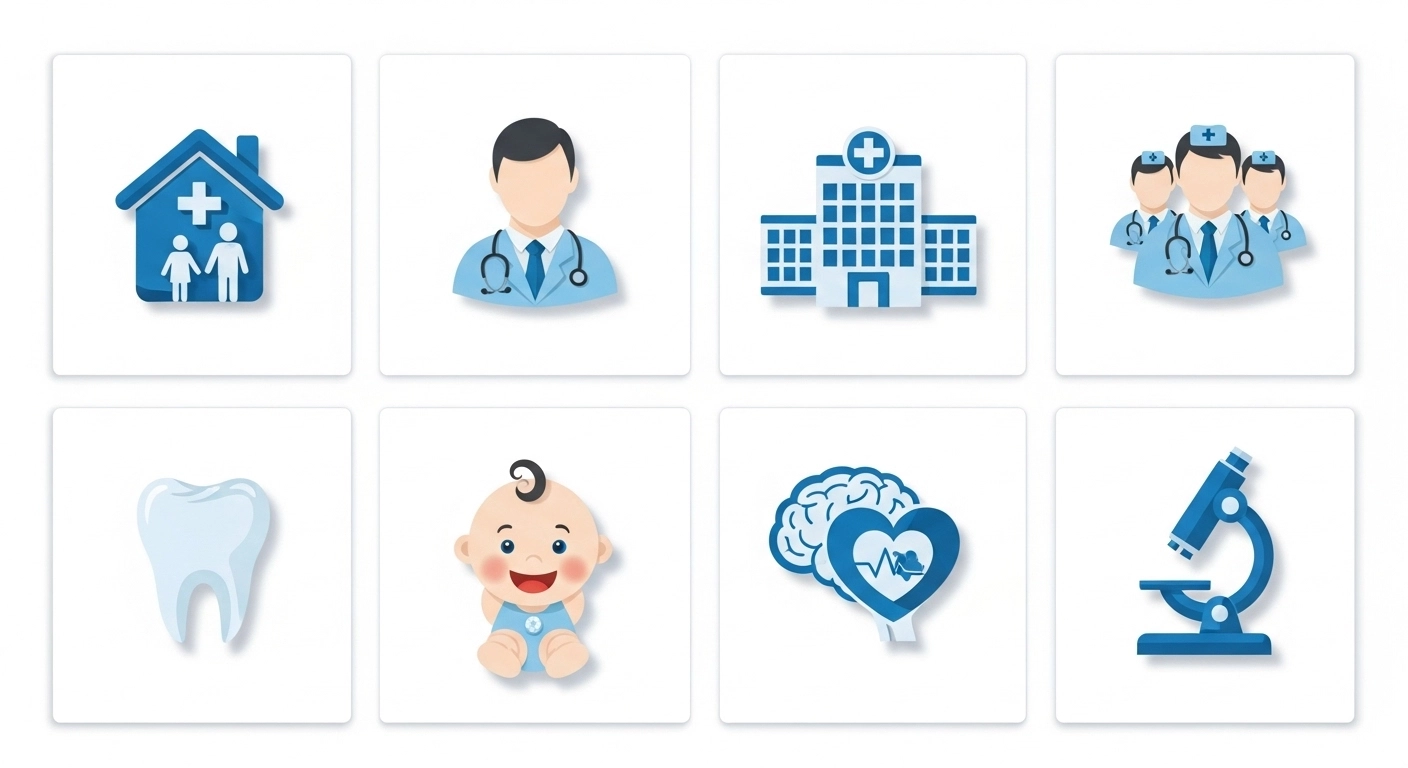
General Practitioner / Family Clinic Website
The most common type. Designed for general physicians and family medicine practices. Covers a broad range of health services, patient education, and appointment booking for all age groups.
Specialist Doctor Website
Built for specialist practitioners: cardiologists, dermatologists, orthopedic surgeons, gynecologists, ENT specialists, and others. Features specialty-specific service pages, treatment descriptions, and procedure information.
Multi-Doctor Clinic Website
A comprehensive platform for clinics with multiple doctors across different specialties. Includes individual doctor profiles, specialty departments, and a unified appointment booking system.
Hospital Website
A large-scale platform for hospitals covering multiple departments, emergency services, lab results, patient portals, and staff directories. Requires extensive development and ongoing maintenance.
Dental Clinic Website
Specialized for dental practices. Features treatment galleries, smile transformation before-and-after photos, teeth whitening and implant service pages, and patient review sections.
Child and Pediatric Clinic Website
Designed specifically for pediatricians and child health specialists. Uses warm, friendly design with parent-focused content covering vaccinations, growth tracking, and child development.
Mental Health and Therapy Website
Built for psychologists, psychiatrists, and therapy centers. Emphasizes privacy, trust, and sensitivity. Features telehealth and online consultation options alongside compassionate, informative content.
Diagnostic and Laboratory Website
For diagnostic centers, imaging labs, and pathology services. Includes test catalog pages, home sample collection booking, online report delivery, and price transparency.
Telemedicine and Online Consultation Website
A growing category in 2026. Allows patients to book and attend video consultations directly through the website. Ideal for expanding your patient reach beyond geographic boundaries.
4. Must-Have Features of a Doctor and Clinic Website
Patients now want quick booking, access to online test results, and video consultation, adding these features to your website makes it easy for patients to take action and also improves your search ranking. Here are all the essential features your medical website must include:
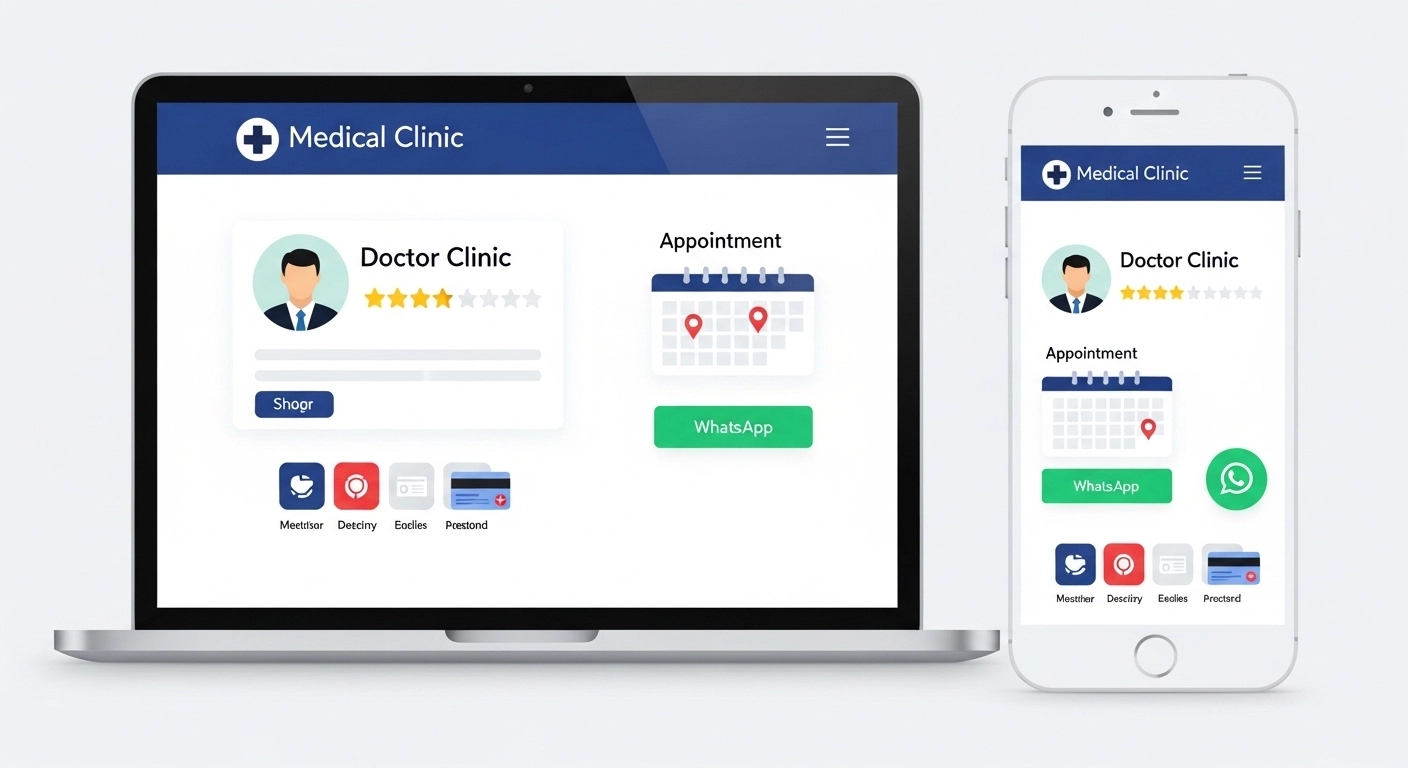
Doctor Profiles with Full Credentials
Each doctor’s profile page should include their full name, photo, medical degree, specialization, years of experience, hospital affiliations, certifications, and languages spoken. Highlighting doctor qualifications, certifications, and experience is a critical E-E-A-T signal that Google uses to evaluate and rank medical websites.
Online Appointment Booking System
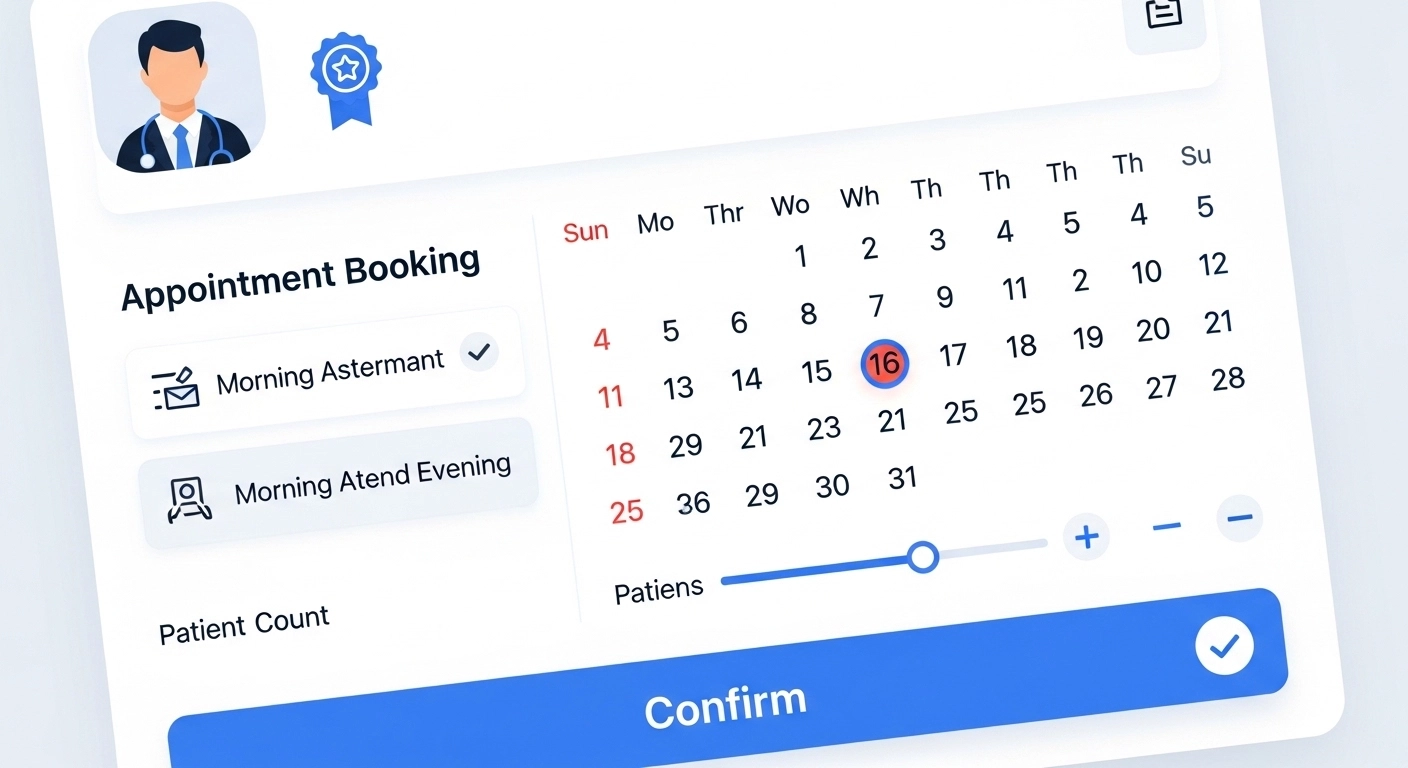
Patients expect to book appointments instantly, without phone calls or long waits. An integrated online booking system that shows real-time availability, allows patients to select their preferred doctor and time slot, and sends automated confirmation messages is essential in 2026.
Mobile-First Responsive Design
Mobile devices are used for over 50% of all online searches, and this number is even higher for urgent healthcare searches. Your medical website must deliver a perfect, fast-loading experience on every smartphone, tablet, and desktop device.
Service and Treatment Pages
Create dedicated pages for every medical service and treatment your clinic offers. Each page should explain the condition or procedure in clear, patient-friendly language, avoiding excessive medical jargon. These pages are powerful SEO assets that attract patients in the research phase.
Patient Reviews and Testimonials
About 75% of people check reviews to pick a doctor. Good reviews boost your ranking and click-through rates. Display authentic patient testimonials, star ratings, and Google review widgets prominently throughout your website.
Secure Patient Inquiry and Contact Forms
Patients need a private, secure way to ask questions and request information. All contact forms must be SSL-encrypted and comply with patient privacy regulations.
Blog and Health Education Section
A regularly updated health blog positions your clinic as a trusted medical authority, drives consistent organic traffic from Google, and helps educate patients while building long-term trust in your practice.
Location Map and Clinic Information
Display your clinic address, Google Maps embed, parking information, public transport directions, phone numbers, WhatsApp link, and clinic hours on every page, especially the homepage and contact page.
WhatsApp Integration
WhatsApp is the dominant communication channel in Pakistan. A WhatsApp Business button on your website allows patients to instantly message your clinic for appointments, queries, and follow-ups, dramatically improving patient engagement and conversion rates.
Photo and Video Gallery
Professional clinic photos, doctor team images, and facility tours build trust and help patients feel comfortable before their first visit. Video introductions from doctors are especially powerful for building a personal connection.
Trust and Credibility Signals
Display your clinic’s registration number, medical council accreditations, awards, affiliations, years in operation, and number of patients treated. Google evaluates medical content under YMYL (Your Money Your Life) guidelines, trust signals are critical for both patient confidence and search engine rankings.
Fast Loading Speed and SSL Security
A slow or insecure medical website loses patients instantly. Every page must load in under 3 seconds, and your entire website must run on HTTPS with a valid SSL certificate to protect patient data and satisfy Google’s security requirements.
5. Medical Website Design Best Practices
Medical website design requires a careful balance between professional credibility, patient trust, and ease of use.
Design for Trust and Calm
Healthcare is an emotionally sensitive domain. Your website design should communicate professionalism, cleanliness, and compassion. Use a clean color palette of whites, light blues, and greens, colors that patients associate with healthcare, hygiene, and healing.
Put the Patient First
Every design decision should be made with the patient in mind. Elderly patients, anxious individuals, and people experiencing health concerns need a website that is simple, clear, and reassuring, not overwhelming or confusing.
Make Appointment Booking Obvious
Your “Book Appointment” button should be visible at the top of every page, in your navigation menu, your hero section, and your page footers. Never make a patient search for how to book.
Use Real Photos, Not Only Stock Images
Authentic photos of your actual doctors, clinic spaces, and staff build far greater trust than generic stock photography. Patients want to know who they will be meeting and what the clinic looks like before they arrive.
Optimize for Readability
Use large, clear fonts. Break content into short paragraphs. Use bullet points and subheadings generously. Many patients are researching symptoms or conditions under stress, make every piece of information easy to scan and understand.
Display Credentials Prominently
Medical degrees, specialist certifications, hospital affiliations, and years of experience should be easy to find. This information directly reduces patient hesitation and increases appointment bookings.
Include Clear Calls-to-Action Throughout
Every page should guide patients toward a clear next step: “Book an Appointment,” “Call Us Now,” “Chat on WhatsApp,” or “Read More About This Treatment.” Never leave a patient wondering what to do next.
6. Online Appointment Booking System Integration
The appointment booking system is the most critical functional element of any medical website. It is where website visitors become actual patients.
Benefits of Online Appointment Booking
- Patients can book 24 hours a day — even at midnight when symptoms appear
- Reduces the workload on your reception staff
- Minimizes missed appointments with automated reminders
- Collects essential patient information before the appointment
- Improves patient satisfaction and practice efficiency
Key Features of a Medical Booking System
- Real-time doctor availability and calendar display
- Multi-doctor and multi-specialty selection
- New and returning patient distinction
- Appointment type selection (consultation, follow-up, procedure)
- Automated confirmation via SMS, email, and WhatsApp
- Appointment reminder notifications 24 hours before
- Cancellation and rescheduling options for patients
- Admin dashboard for clinic staff to manage all bookings
- Integration with Google Calendar or clinic management software
Types of Booking Systems for Medical Websites
Custom-Built Booking Engine Developed specifically for your clinic’s workflow. Offers maximum flexibility and seamless integration with your existing practice management system.
Third-Party Booking Plugins Solutions like Amelia, BookingPress, or Zocdoc-style integrations provide ready-made booking functionality that can be quickly integrated into your website.
Telemedicine Integration For clinics offering online consultations, integrate video call functionality directly into the booking flow so patients can attend appointments from home.
7. SEO for Doctor and Clinic Websites
Investing in healthcare SEO makes your practice more patient-friendly, reliable, and discoverable. In 2026, doctors who use SEO to control their reputation will succeed. Here is a comprehensive SEO strategy for medical websites:
High-Value Medical SEO Keywords to Target
Primary Keywords (High Volume):
- doctor website development
- clinic website design
- medical website development Pakistan
- best website for doctors
- hospital website design
Specialty-Specific Keywords:
- dermatologist website design
- dental clinic website development
- pediatric clinic website
- gynecologist website Pakistan
- cardiologist website design
Service-Based Keywords:
- online appointment booking system for doctors
- medical website with patient portal
- telemedicine website development
- doctor profile website design
- clinic management website
Local SEO Keywords (Pakistan-Specific):
- doctor website development in Lahore
- clinic website design Karachi
- medical website development Islamabad
- best doctor website Pakistan
- hospital website development Pakistan
Long-Tail Keywords (High Intent):
- how to build a website for a medical clinic
- best platform for doctor website 2026
- clinic website with online appointment booking Pakistan
- affordable medical website development Pakistan
- SEO for clinic website Pakistan
On-Page SEO for Medical Websites
Title Tags: Include your specialty and location. Example: “Best Dermatologist in Lahore | Dr. Ahmed Skin Clinic”
Meta Descriptions: Write clear 150-160 character descriptions that explain your specialty, location, and a patient benefit. Include a call to action.
H1 and H2 Headings: Use your primary keyword in the H1 on each page. Use service names and location keywords naturally in H2 subheadings.
URL Structure: Clean, descriptive URLs. Example: /services/skin-treatment-lahore or /doctors/dr-ahmed-dermatologist
Image Optimization: Name doctor and clinic photos descriptively. Write alt text for every image including doctor name, specialty, and location.
Schema Markup: Schema is structured code that makes your website machine-readable — telling Google, AI platforms, and voice assistants precisely who you are, what you treat, when you are open, and who your doctors are. Implement Physician schema, MedicalClinic schema, FAQPage schema, and LocalBusiness schema.

E-E-A-T: The Most Important Factor for Medical SEO
For healthcare websites, E-E-A-T: Experience, Expertise, Authoritativeness, and Trustworthiness, is vital. Google evaluates medical content under YMYL (Your Money Your Life) guidelines. To build strong E-E-A-T signals:
- Include detailed doctor biography pages with qualifications and credentials
- Cite medical sources and reference established health organizations
- Publish regularly updated, medically accurate health content
- Display patient reviews and testimonials prominently
- Ensure all medical information is reviewed and approved by qualified doctors
- Keep contact details, clinic hours, and location information accurate and consistent
Local SEO for Clinics
Your Google Business Profile remains the strongest local ranking lever for medical searches. Correct primary medical category, accurate clinic name, clear service listings, proper business hours, real clinic photos, and ongoing activity through posts and updates are all essential.
Additional local SEO steps:
- Ensure your clinic’s Name, Address, and Phone (NAP) are identical across all online listings
- List your clinic on local healthcare directories and platforms
- Actively gather and respond to patient Google reviews
- Create location-specific service pages targeting patients in your city
- Embed Google Maps on your contact page
Content Strategy for Medical SEO
Writing a blog with tips on managing health conditions or preventing common illnesses attracts interested readers and potential patients, as your traffic increases, so will your search rankings, making your practice a trusted and reliable resource. Build your content strategy around:
Condition and Symptom Guides: “What Causes Chronic Back Pain and How Is It Treated?” target patients researching their symptoms.
Treatment Explainers: “What to Expect During a Cardiac Stress Test” builds trust and prepares patients.
Health Tips and Prevention: “10 Foods That Improve Heart Health” attracts health-conscious readers and builds brand awareness.
FAQ Content: Answering common patient questions directly captures Google’s People Also Ask (PAA) boxes.
Local Health Content: “Best Doctors for Diabetes in Lahore” hyper-targeted local content that attracts patients in specific cities.
8. Best Technology Stack for Medical Websites
Choosing the right technology ensures your medical website is fast, secure, scalable, and easy to manage.
WordPress — Best for Most Clinics
WordPress powers over 43% of all websites globally and offers unmatched flexibility, an extensive ecosystem of medical-specific plugins, and superior SEO capabilities. With the right theme and plugins, WordPress can power everything from a solo practitioner’s website to a large multi-specialty clinic.
Best for: General practitioners, specialist doctors, small to mid-size clinics, dental practices.
Custom PHP / Laravel Development
A fully custom-built medical website using PHP frameworks. Ideal for hospitals and large clinic networks that need unique patient portal functionality, custom integrations with hospital management systems, or complex multi-department structures.
Best for: Hospitals, multi-location clinic chains, diagnostic centers.
React.js / Next.js Frontend
A modern JavaScript-based approach delivering blazing-fast page speeds and superior user experience. Ideal for high-traffic medical portals and telemedicine platforms where speed and performance are paramount.
Best for: Telemedicine platforms, high-traffic medical portals, large healthcare networks.
Key Integrations for Medical Websites
- Appointment Systems: Amelia, BookingPress, or custom booking engines
- Payment Gateways: JazzCash, Easypaisa, credit/debit cards for consultation fee collection
- Communication: WhatsApp Business API, Twilio for SMS reminders
- Mapping: Google Maps API for clinic location
- Video Consultations: Zoom API, Google Meet API, or custom WebRTC for telemedicine
- Email Marketing: Mailchimp for patient newsletters and health tips
- Analytics: Google Analytics 4, Google Search Console for performance tracking
9. Doctor and Clinic Website Cost Breakdown
Here is a transparent cost breakdown for medical website development in Pakistan:
Option 1: Basic Clinic Website (WordPress Template)
| Item | Cost |
|---|---|
| Domain Name | PKR 2,000–5,000/year |
| Web Hosting | PKR 5,000–15,000/year |
| Premium Medical Theme | PKR 15,000–35,000 (one-time) |
| Appointment Booking Plugin | PKR 10,000–30,000/year |
| Basic Setup & Configuration | PKR 30,000–70,000 |
| Total Estimate | PKR 60,000–155,000 |
Option 2: Professional Custom Medical Website
| Item | Cost |
|---|---|
| Custom Design & Development | PKR 150,000–450,000 |
| Appointment Booking System | PKR 50,000–120,000 |
| Doctor Profiles & Service Pages | PKR 30,000–80,000 |
| SEO Foundation Setup | PKR 30,000–80,000 |
| Quality Hosting (Annual) | PKR 20,000–50,000 |
| Total Estimate | PKR 280,000–780,000 |
Option 3: Hospital / Multi-Specialty Portal
| Item | Cost |
|---|---|
| Full Custom Development | PKR 500,000–2,500,000+ |
| Patient Portal Integration | PKR 200,000–600,000 |
| Advanced Booking & Management | PKR 150,000–400,000 |
| Ongoing Maintenance | PKR 25,000–80,000/month |
| Total Estimate | PKR 875,000–3,580,000+ |
💡 Pro Tip: A professionally developed medical website is one of the highest-ROI investments for any clinic. New patient acquisition through organic search consistently delivers returns far exceeding the initial development investment within the first 6–12 months.
10. How to Market Your Medical Website
Building your medical website is just the beginning. Here is how to consistently attract new patients:
Search Engine Optimization (SEO)
As detailed above, SEO is the most sustainable long-term patient acquisition channel for any clinic. Clinics that invest in credibility, brand consistency, medical authority, and ethical optimization create visibility that endures through algorithm updates.
Google Business Profile Optimization
Your Google Business Profile is the single most powerful tool in local SEO for doctors, full stop. Keep it fully updated with accurate information, real clinic photos, regular posts, and active review management.
Google Ads for Immediate Visibility
Target high-intent keywords like “dentist in Lahore” or “skin specialist Karachi” with Google Search Ads. PPC campaigns deliver immediate patient inquiries while your organic SEO builds momentum.
Social Media Marketing
Facebook and Instagram are powerful platforms for clinics in Pakistan. Share health tips, doctor introductions, patient success stories (with consent), clinic updates, and educational content to build your community and drive traffic to your website.
Patient Review Management
The top 3 results in local map packs had, on average, 280 reviews each; reviews are a huge indicator of importance in ranking at the top of search. Actively encourage satisfied patients to leave Google reviews and respond professionally to all feedback.
WhatsApp Marketing
Use WhatsApp Business to send appointment reminders, health tips, seasonal health alerts, and follow-up messages to your existing patient base. Personal communication builds loyalty and encourages repeat visits.
Health Content and Blogging
Publish regular blog posts answering the health questions your patients are searching for. Educational content builds trust, attracts organic traffic, and positions your clinic as the go-to health authority in your area.
Email Newsletter
Build a patient email list and send regular health tips, seasonal wellness advice, new service announcements, and appointment reminders. Email marketing keeps your clinic top of mind between visits.
11. Common Mistakes in Medical Website Development
Avoid these costly mistakes that many clinics and doctors make with their websites:
❌ No online appointment booking — If patients cannot book directly on your website, you are losing appointments to competitors who make booking effortless.
❌ Poor mobile experience — Over 60% of healthcare searches happen on smartphones. A website that is difficult to use on a phone is driving patients straight to your competitors.
❌ Missing doctor credentials — Patients want to know exactly who will be treating them. A website without complete doctor profiles and qualifications loses patient trust immediately.
❌ No patient reviews displayed — 75% of patients check reviews before choosing a doctor. A website without testimonials or review integration misses the most powerful trust-building tool available.
❌ Ignoring local SEO — Most patients search for doctors in their city or neighborhood. Without local SEO optimization, your clinic is invisible in the searches that matter most.
❌ Slow loading speed — Patients searching for healthcare solutions are often anxious and impatient. A slow website loses them before they even see your services.
❌ No SSL security certificate — Patients will not submit personal health information or contact details on an insecure website. HTTPS is non-negotiable.
❌ Outdated clinic information — Incorrect hours, wrong phone numbers, or outdated doctor lists damage your credibility and frustrate patients before they even visit.
❌ No WhatsApp or instant contact option — Pakistani patients strongly prefer WhatsApp for communication. A medical website without WhatsApp integration misses a major conversion opportunity.
❌ Ignoring E-E-A-T signals — Google applies its highest scrutiny to medical websites. Without clear expertise, authority, and trust signals, your website will struggle to rank regardless of other SEO efforts.
12. Medical Website Trends in 2026
The healthcare digital landscape is evolving rapidly. Here are the trends defining high-performing medical websites in 2026:
AI-Powered Patient Experience
AI helps predict patient queries and tailors content for maximum engagement. Use AI-driven content recommendations for service pages and track patient search patterns using Google Analytics GA4. AI chatbots on medical websites now handle appointment scheduling, symptom pre-assessment, and common patient queries around the clock.
Telemedicine and Video Consultations
Online consultations have moved from a pandemic-era necessity to a permanent patient expectation. Patients now want quick booking, access to online test results, and video consultation. Adding these features to your website improves your ranking and gets more bookings.
Voice Search Optimization
Patients increasingly use voice commands to search for healthcare: “Find a cardiologist near me open Saturday.” Adding conversational keywords that match how people speak and using schema markup helps voice assistants understand your practice information, services, and location.
Generative Engine Optimization (GEO)
Traditional SEO is what proves to the internet that you are a real, licensed, and trusted physician, but in 2026, doctors must also optimize for AI visibility through Generative Engine Optimization so that AI platforms like ChatGPT, Gemini, and Perplexity can recommend your practice.
Mobile-First Everything
With 60% of travel industry traffic on mobile and Google using mobile-first indexing, mobile optimization is the single highest-leverage technical action for websites in 2026, and this applies equally to medical websites. Every element of your clinic website must be designed for mobile first.
Patient Portal Integration
Patients in 2026 expect digital access to their health records, test results, prescriptions, and appointment history through a secure online patient portal. Clinics offering this feature see significantly higher patient retention and satisfaction scores.
Online Reputation Management
AI search platforms like ChatGPT, Claude, Perplexity, and Gemini now evaluate credibility, consistency, reputation, and patient trust signals before recommending healthcare providers. Proactive online reputation management is no longer optional — it is a core component of medical digital marketing.

13. Why Choose ZNT Solutions for Your Medical Website?
At ZNT Solutions, we specialize in building high-performance medical websites that are not just professionally designed; they are engineered to attract new patients, build clinical credibility, and grow your healthcare practice in Pakistan and beyond.
What We Deliver
Custom Medical Website Design We build fully custom, brand-aligned medical websites that communicate professionalism, trust, and clinical expertise, making a powerful first impression on every patient who visits your site.
SEO-Optimized Development Every medical website we build is engineered for search engine visibility from day one, clean code, E-E-A-T optimized structure, fast loading, local SEO setup, and proper schema markup for medical practices.
Online Appointment Booking Integration We integrate powerful booking systems that allow your patients to view doctor availability and book appointments directly from your website, 24 hours a day, 7 days a week.
Mobile-First Development Every website we build delivers a perfect, fast-loading experience on all smartphones, tablets, and desktop devices, because most of your patients are searching on their phones.
WhatsApp and Payment Integration We integrate WhatsApp Business for instant patient communication and payment options including JazzCash, Easypaisa, and credit/debit cards for online consultation fee collection.
Ongoing Support and Maintenance Your medical website requires regular security updates, content updates, and performance optimization. ZNT Solutions provides dedicated ongoing support to keep your website performing at its best.
Complete Digital Marketing Services We do not just build your website — we help fill it with patients. Our services include medical SEO, social media marketing, Google Ads management, and AI-powered health content creation.
14. Frequently Asked Questions
Q: How long does it take to build a doctor or clinic website? A: A professionally designed clinic website typically takes 3–5 weeks. A complex multi-specialty hospital website with custom patient portal and booking system integration can take 8–16 weeks depending on scope and requirements.
Q: Do I need a custom website or can I use a template? A: Both are viable depending on your budget. A premium medical template can deliver professional results quickly and affordably. However, a custom-built website provides unique design, better performance, stronger SEO, and functionality tailored exactly to your practice’s specific needs.
Q: How important is SEO for a clinic website in Pakistan? A: SEO is the single most important long-term patient acquisition investment for your clinic. The majority of patients begin their healthcare search on Google. An SEO-optimized clinic website consistently drives free, high-intent traffic from patients who are actively looking for a doctor in your specialty and city.
Q: Can my clinic website rank on Google for competitive medical keywords? A: Yes, with the right strategy. While broad keywords like “best doctor” are highly competitive, local and specialty-specific long-tail keywords like “skin specialist in Lahore” or “pediatrician in Karachi” are very achievable for a professionally optimized medical website.
Q: How much does a clinic website cost in Pakistan? A: A professional clinic website developed by ZNT Solutions starts from PKR 150,000 for a complete custom solution. The investment varies based on the number of doctors, services offered, booking system complexity, and additional features required.
Q: Can patients book appointments directly through the website? A: Absolutely. We integrate a full online appointment booking system where patients can view real-time doctor availability, select their preferred specialist, choose an appointment time, and receive instant confirmation via WhatsApp, SMS, or email.
Q: Will my medical website work on smartphones? A: Yes. Every website built by ZNT Solutions is fully mobile-responsive with a perfect user experience on all smartphones, tablets, and desktop devices.
Q: Is my patients’ data safe on the website? A: Yes. We implement SSL encryption across the entire website, use secure contact forms, and follow best practices for patient data protection to ensure all information submitted through your website is handled safely and securely.
Q: Can you add a health blog to my medical website? A: Yes. We include a fully integrated blog and content management system with every medical website we build. A regularly updated health blog is one of the most powerful tools for attracting organic patient traffic from Google.
Q: Do you provide website maintenance after launch? A: Yes. ZNT Solutions offers dedicated ongoing maintenance and support packages to keep your medical website secure, updated, and performing at its peak after launch.
Final Thoughts
A professionally developed doctor and clinic website is the most powerful investment you can make in the growth of your healthcare practice in 2026. It works for you around the clock — attracting patients from Google, showcasing your medical expertise, building patient trust, and converting visitors into booked appointments.
The healthcare industry is more competitive than ever. Patients expect fast, credible, and easy-to-use medical websites that give them the information and confidence they need to book with you. Clinics that invest in professional web development, local SEO, and digital marketing consistently outperform competitors who rely on outdated websites or word-of-mouth alone.
Ready to build a medical website that attracts real patients?
At ZNT Solutions, we combine expert web development, trust-focused design, and healthcare SEO strategy to build clinic and doctor websites that deliver measurable results.
📞 Contact ZNT Solutions today for a free consultation and let us build the medical website your practice deserves.
This blog is published by ZNT Solutions — a leading web development and digital marketing agency offering SEO, web development, social media marketing, and AI-powered content creation services for businesses across Pakistan.