


Table of Contents
1. Why Every Professional Needs a Portfolio Website?
In 2026, your skills and talent alone are not enough to win clients or land your dream job. Before a potential client, employer, or collaborator decides to work with you, they search for you online: they look at your work, read your story, and judge your credibility within seconds of landing on your page.
A professionally built portfolio website is the single most powerful tool any creative professional, freelancer, developer, designer, photographer, or agency can have in their digital arsenal. It is your personal brand, your proof of work, and your sales pitch: all presented in one polished, high-performance platform.
Here are the numbers that make this undeniable:
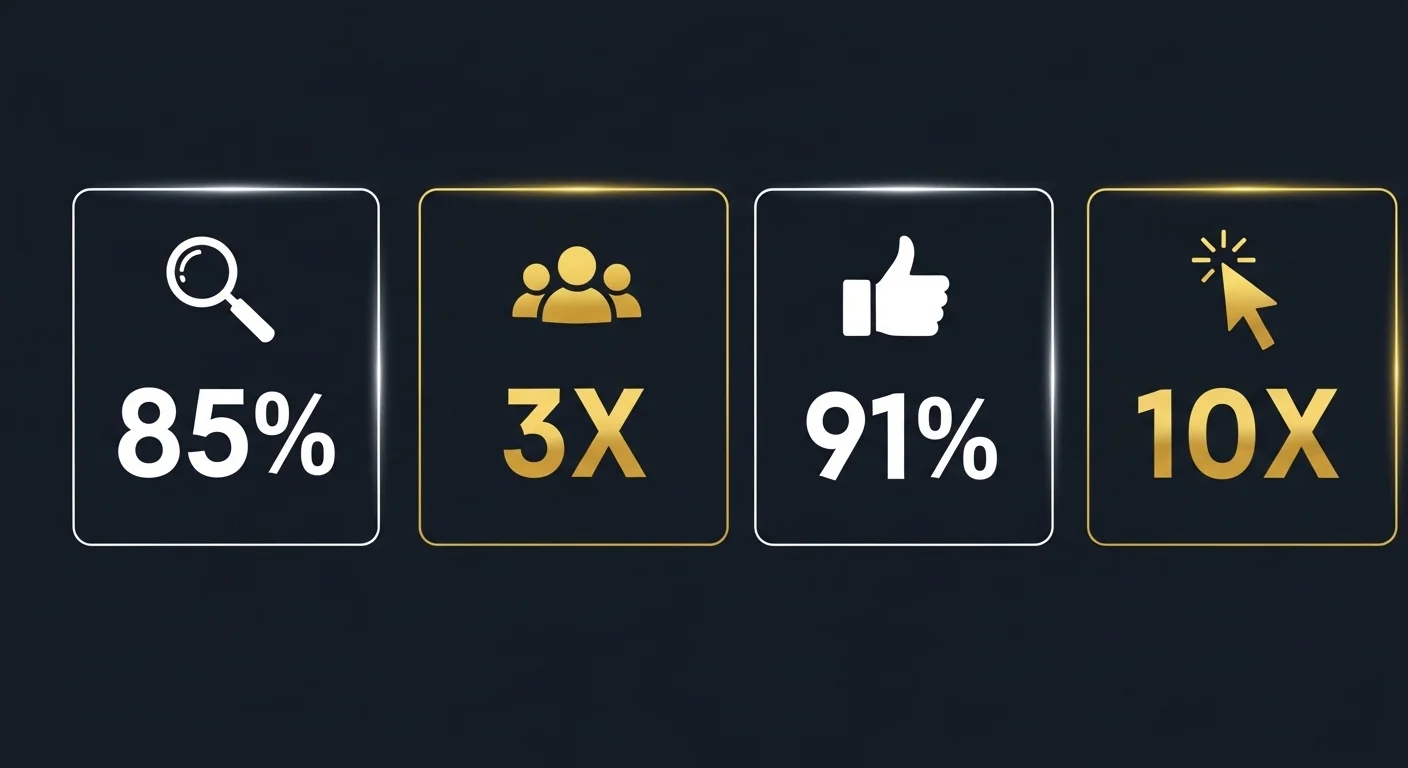
- Over 85% of hiring managers and clients research a professional’s online presence before making contact
- Professionals with dedicated portfolio websites receive up to 3 times more client inquiries compared to those relying only on social media profiles
- Your portfolio can only rank for what you intentionally target: keyword mapping is always the first step, covering homepage copy, metadata, project pages, and image SEO
- SEO still delivers 91% positive ROI for marketers and professionals who invest in it consistently
- A site at position 1 on Google gets 10 times more clicks than one at position 10: ranking on the first page is the difference between being discovered and being invisible
A portfolio website works for you around the clock: attracting new clients, demonstrating your expertise, building your professional reputation, and generating opportunities while you focus on your craft.
💡 Key Insight: In 2026, your portfolio website is your most credible first impression. A slow, outdated, or poorly structured portfolio does not just fail to impress: it signals to potential clients that your standards are low, even if your actual work is exceptional.
2. What Is a Portfolio Website?
A portfolio website is a professionally designed digital platform that showcases your best work, skills, experience, and personal brand to the world. It is a carefully curated collection of your projects, case studies, and achievements: presented in a way that communicates your unique value to potential clients, employers, and collaborators.
Unlike a LinkedIn profile or a social media page, a portfolio website gives you complete creative and strategic control: over your design, your narrative, your SEO, and your conversion strategy.
A high-performance portfolio website includes:
- A compelling About page that communicates your personality, expertise, and professional story
- A curated Work or Projects section showcasing your best and most relevant pieces
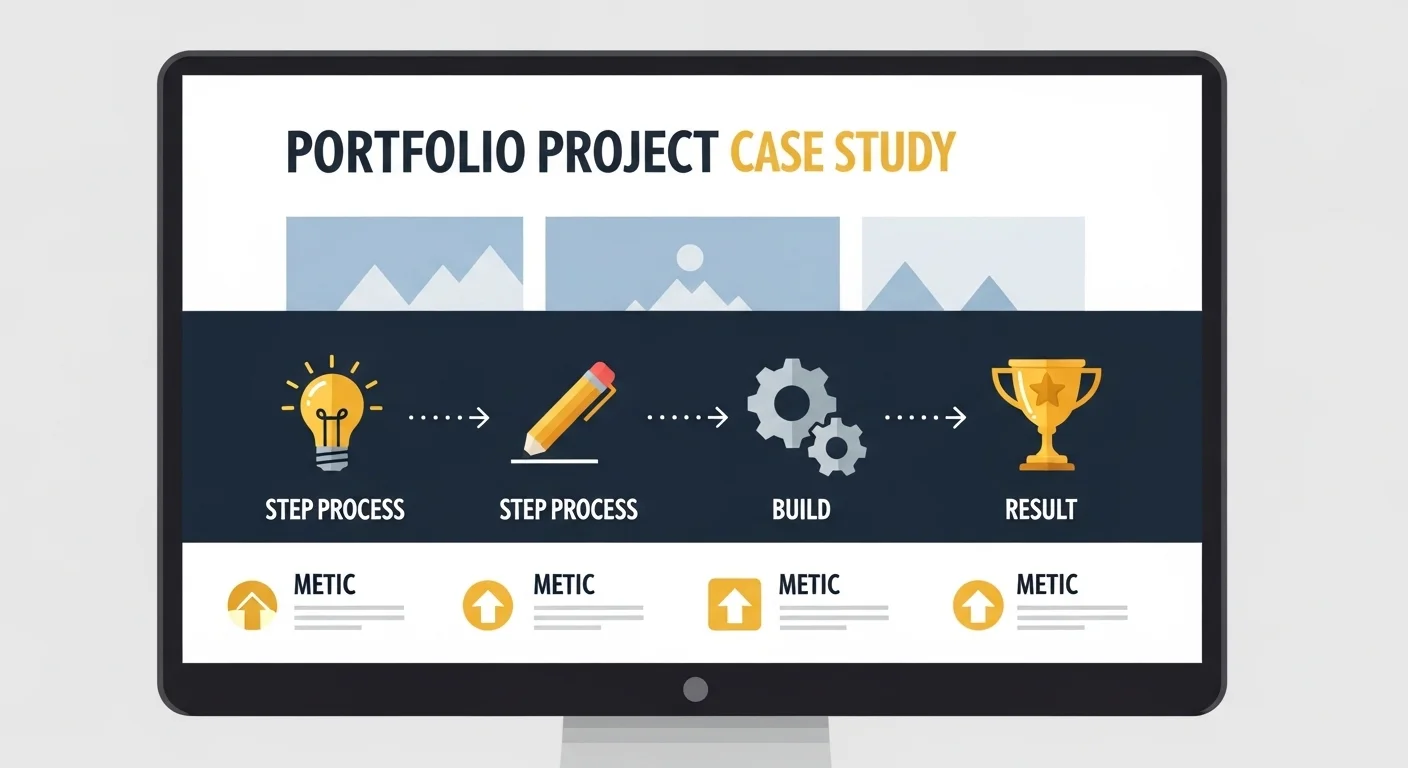
- Detailed Case Study pages explaining your process, challenges, and measurable results
- A Services page clearly defining what you offer and who you work with
- Client testimonials and reviews that validate your skills and build trust
- A Blog or Insights section for thought leadership content that drives organic SEO traffic
- A clear Contact page with multiple ways to reach you: email, WhatsApp, contact form, and social links
- SEO-optimized metadata on every page so Google can find and rank your work
A well-built portfolio website is not just a gallery. It is a strategic, conversion-focused platform that turns visitors into paying clients.
3. Types of Portfolio Websites
Portfolio websites differ significantly depending on the profession and purpose. Here are the main types:
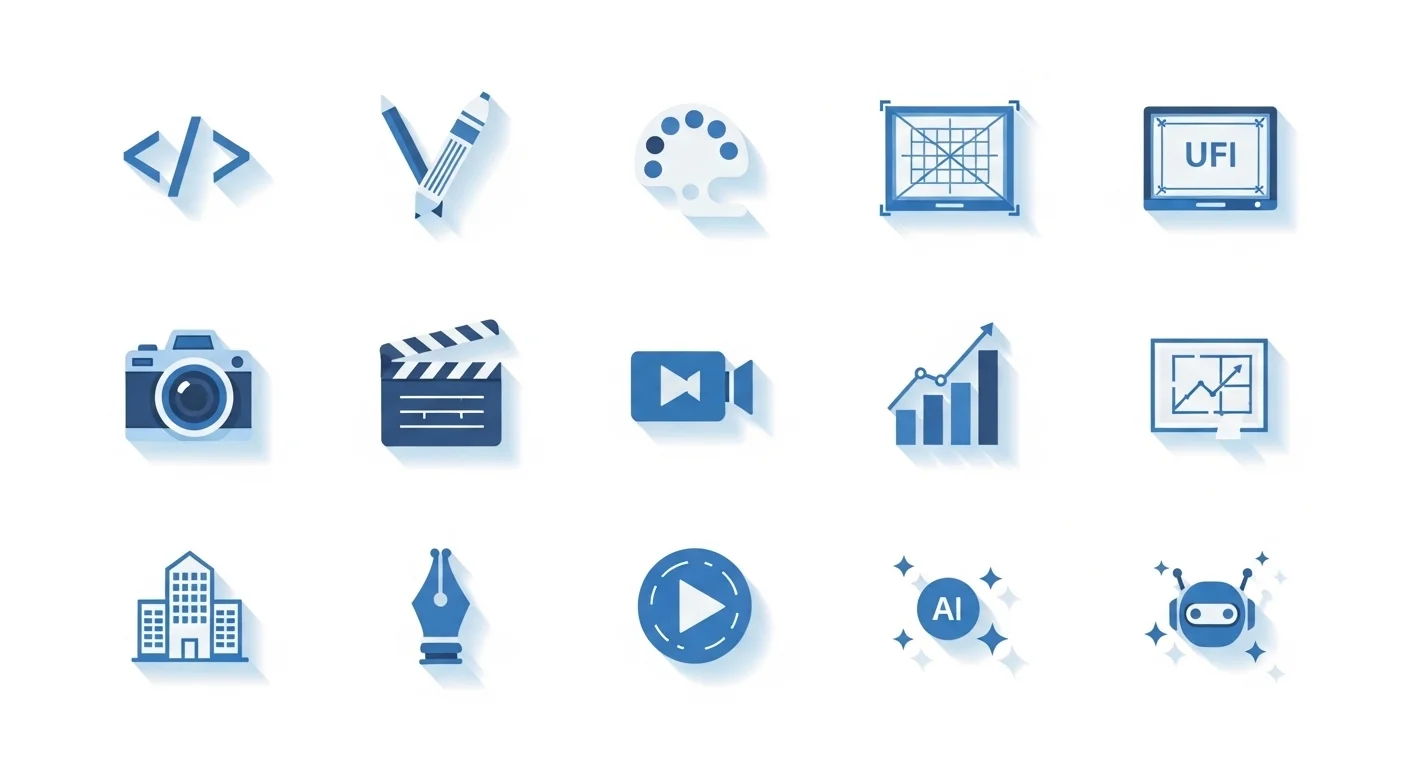
Web Developer Portfolio Website
Showcases coding projects, technical skills, tech stacks, GitHub integrations, and live project demonstrations. Clients and employers look for clean code examples, real-world applications, and demonstrable problem-solving ability.
Graphic Designer Portfolio Website
Features branding projects, logo designs, print materials, packaging designs, and visual identity systems. Strong visual presentation and intuitive navigation are critical for designer portfolios.
UI and UX Designer Portfolio Website
Displays wireframes, prototypes, user research, interface designs, and detailed case studies explaining the design thinking process. Depth of explanation is as important as the final visual output.
Photographer Portfolio Website
Built around high-quality image galleries organized by category: weddings, portraits, commercial, architecture, fashion, and events. Image loading speed and visual impact are the top priorities.
Videographer and Video Editor Portfolio Website
Features embedded video showcases, production reels, client project breakdowns, and equipment or software expertise. Video quality and portfolio organization drive hiring decisions.
Digital Marketing Agency Portfolio Website
Showcases completed campaigns, client results, SEO rankings achieved, social media growth metrics, and content marketing projects. Data and measurable results are the most compelling portfolio elements.
Architect and Interior Designer Portfolio Website
Displays completed projects with high-resolution renders, floor plans, before-and-after transformations, and project descriptions. Location-based SEO is especially important for attracting local clients.
Writer and Content Creator Portfolio Website
Features published articles, copywriting samples, content strategy work, and client testimonials. Niche specialization and demonstrated expertise drive the most valuable inquiries.
Motion Designer and Animator Portfolio Website
Showcases animated projects, motion graphics reels, 3D work, and client collaborations. Smooth video playback and fast loading are essential to deliver an impressive first impression.
AI Content Creator Portfolio Website
A rapidly growing category in 2026: showcasing AI-generated images, AI video production, AI copywriting, and AI-powered content strategies for clients. Demonstrating real client results sets top AI creators apart.
4. Must-Have Features of a Portfolio Website
The most important features your portfolio website must have in 2026 are not just about aesthetics: they are about performance, discoverability, and conversion.
Stunning Visual Presentation
Your work is the product: it must look exceptional. Use high-resolution images, well-compressed videos, clean whitespace, and a design that lets your projects speak for themselves without visual clutter competing for attention.
Individual Project and Case Study Pages
The most common mistake is relying on a single page instead of dedicated project pages: one URL cannot carry all your SEO weight. Each project deserves its own dedicated page with a full description: the client brief, your process, the challenges faced, the solutions delivered, and the measurable results achieved.
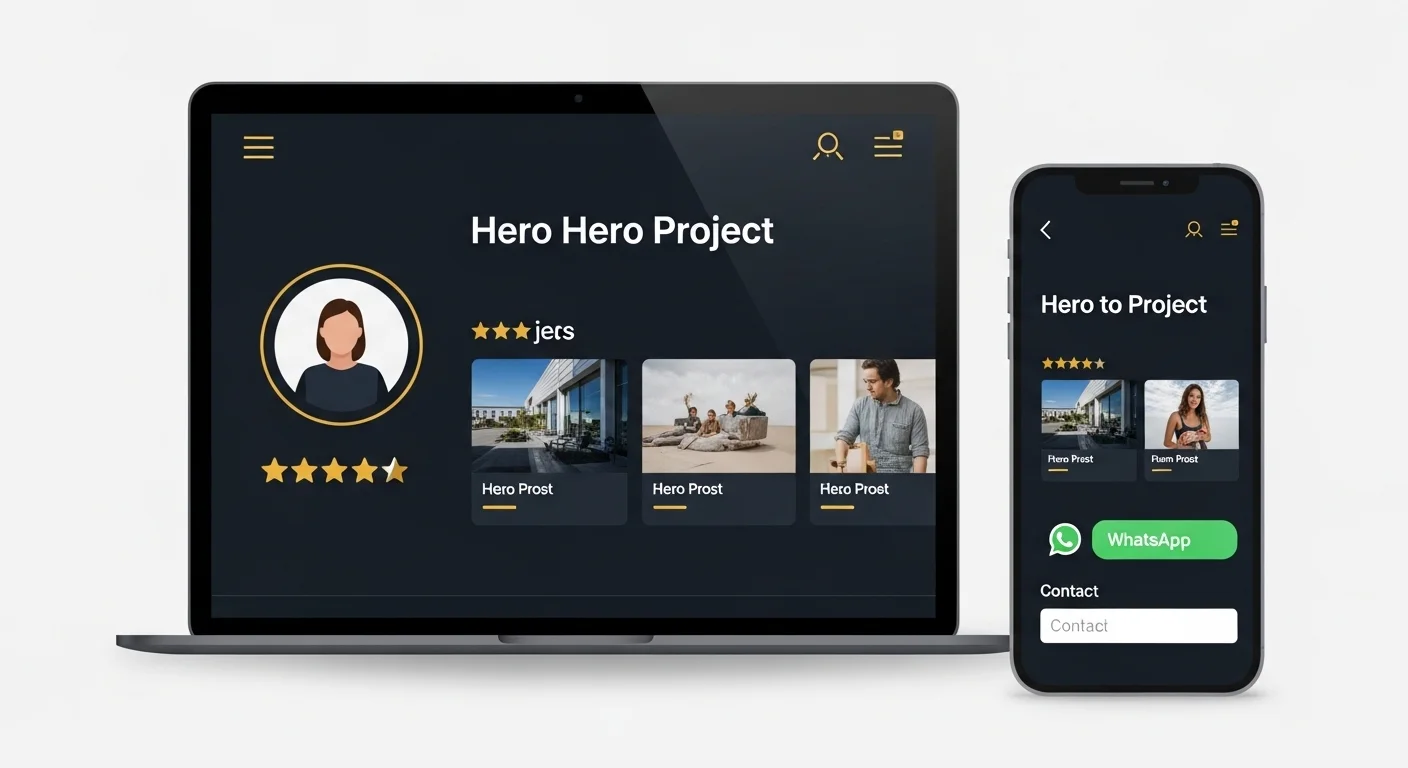
Mobile-First Responsive Design
Over 60% of all web traffic comes from mobile devices. Your portfolio must deliver a flawless, fast-loading visual experience on every screen size: from the largest desktop monitor to the smallest smartphone.
Fast Page Loading Speed
Heavy image files are the most common cause of slow portfolio websites. Compress every image without sacrificing quality: use modern formats like WebP, implement lazy loading for galleries, and choose fast, reliable hosting. Pages must load in under 3 seconds on every device.
Clear Services and Offerings Page
Do not make potential clients guess what you do or what you offer. A dedicated services page clearly stating your specializations, deliverables, and process eliminates friction and dramatically increases the quality of inquiries you receive.
Client Testimonials and Social Proof
Authentic testimonials from real clients, complete with their name, company, and photo, are among the most powerful conversion elements on any portfolio website. Display them prominently on your homepage, project pages, and contact page.
Contact Page with Multiple Options
Make it effortless for potential clients to reach you. Include a contact form, email address, WhatsApp link, LinkedIn profile, and your location or time zone: every barrier you remove between a visitor and their first message increases your inquiry rate.
Blog or Insights Section
The most common mistake designers make is uploading just a simple photo gallery: Google cannot read images as well as it can read text. A blog section gives your portfolio textual context, builds topical authority, and attracts organic search traffic from potential clients in the research phase.
SEO-Optimized Metadata on Every Page
Missing metadata is one of the biggest missed SEO opportunities in this field: titles, descriptions, and alt text matter more than most creators think. Every page needs a keyword-rich title tag, meta description, and properly written alt text for every image.
SSL Security and HTTPS
A secure website is a trust signal for both visitors and Google. Every portfolio website must run on HTTPS with a valid SSL certificate: without it, browsers display security warnings that instantly undermine your professional credibility.
Google Analytics and Search Console Integration
Track which projects attract the most visitors, which pages convert best, and which keywords drive your organic traffic. Data-driven optimization is the difference between a portfolio that grows and one that stagnates.
5. Portfolio Website Design Best Practices
Portfolio website design requires a precise balance: letting your work shine while guiding visitors toward contacting you.
Lead with Your Best Work
Your homepage is not the place for introductions: it is the place for impact. Open with your strongest, most relevant project. The work that best represents who you are and what you want to do more of should be the very first thing a visitor sees.
Keep the Design Clean and Minimal
Overly complex designs compete with your work for attention. Clean whitespace, consistent typography, and a restrained color palette keep the focus exactly where it belongs: on your projects.
Make Your Niche Immediately Clear
Your medium and style are SEO gold: make them obvious. Clear labeling of your style and technique across project pages is essential: never assume someone knows what type of creator you are, spell it out in your copy so both users and search engines understand instantly.
Use Consistent Visual Language
Your portfolio website is itself a piece of design work: every font choice, color decision, and layout pattern is a demonstration of your aesthetic judgment. Inconsistency signals a lack of attention to detail.
Design for One Primary Action
Every page of your portfolio should guide visitors toward a single, clear goal: typically to contact you, request a quote, or book a consultation. Remove distractions and make that one action obvious on every page.
Show Your Process, Not Just Results
Clients do not just buy the final output: they buy confidence in your process. Showing wireframes, sketches, iterations, and behind-the-scenes thinking on your case study pages communicates professionalism and builds trust more effectively than polished results alone.
Use Authentic Photography
A professional headshot and real photos of your workspace or team build a personal connection. Clients hire people they trust: authentic visuals make you real and approachable in a way that generic stock photos never can.
6. How to Showcase Your Work Effectively
The way you present your work is as important as the work itself. Here is how to make every project on your portfolio as compelling as possible:
Select Quality Over Quantity
A portfolio with 8 exceptional projects outperforms one with 30 average ones every time. Be ruthlessly selective: only include work you are genuinely proud of, and that represents the type of projects you want to attract more of.
Tell the Story Behind Every Project
Every project page should answer four questions: What was the client’s challenge? What approach did you take? What did you deliver? What were the results? This narrative structure demonstrates your thinking process: not just your technical execution.
Use Measurable Results Wherever Possible
Numbers build credibility in a way that descriptive language cannot. Where possible, include specific outcomes: “Increased organic traffic by 140%”, “Reduced checkout abandonment by 32%”, “Delivered 6 weeks ahead of schedule”. Measurable results turn your portfolio into undeniable proof.
Organize by Category or Specialty
If your work spans multiple disciplines or industries, organize your portfolio into clear categories. Clients searching for a specific type of work should be able to find the most relevant projects immediately, without having to scroll through unrelated pieces.
Include Client Names and Logos Where Permitted
Recognizable client names and brand logos instantly elevate your credibility. Where clients have given permission, display their logo on your project page and in a dedicated client section on your homepage.
Keep Project Pages Updated
An outdated portfolio signals an inactive professional. Review your portfolio every three to six months: replace older, weaker work with recent, stronger projects. Always show your most current skill level.
7. SEO for Portfolio Websites
Your portfolio can only rank for what you intentionally target: keyword mapping is always the first step, setting the foundation for everything that follows, including homepage copy, metadata, project pages, and image SEO.
High-Value Portfolio SEO Keywords to Target
Primary Keywords (High Volume):
- portfolio website development
- professional portfolio website design
- creative portfolio website
- best portfolio website 2026
- how to build a portfolio website
Profession-Specific Keywords:
- web developer portfolio website
- graphic designer portfolio website
- UI UX designer portfolio website
- photographer portfolio website
- digital marketing portfolio website
Service and Niche Keywords:
- freelance web designer portfolio
- brand identity designer portfolio
- SEO specialist portfolio website
- AI content creator portfolio Pakistan
- motion designer portfolio website
Local SEO Keywords (Pakistan-Specific):
- portfolio website development Lahore
- creative portfolio website design Karachi
- web developer portfolio Pakistan
- freelance designer portfolio Islamabad
- professional portfolio website Pakistan
Long-Tail Keywords (High Intent, Low Competition):
- how to build a professional portfolio website 2026
- best platform for portfolio website developer
- portfolio website with case studies SEO optimized
- affordable portfolio website development Pakistan
- portfolio website design for graphic designer Pakistan
On-Page SEO for Portfolio Websites
Homepage: Target your primary keyword and specialty clearly. Example title tag: “UI UX Designer Portfolio | Lahore | ZNT Solutions”
Project Pages: Project-level keywords for each case study, for example “brand identity for fashion label” or “ecommerce website for retail client”, should match the real phrases clients search.
About Page: Include your name, specialization, location, and years of experience with natural keyword integration. This page is critical for branded and professional identity searches.
Services Page: Each service needs its own keyword-rich heading, description, and dedicated URL. Example: /services/brand-identity-design or /services/web-development
URL Structure: Clean, descriptive, and keyword-rich. Example: /projects/ecommerce-website-lahore or /projects/logo-design-fashion-brand
Image Alt Text: Skipping text descriptions is a critical mistake: Google cannot see visuals without written context. Write descriptive, keyword-rich alt text for every project image, screenshot, and visual element.
Technical SEO for Portfolio Websites
- Compress all portfolio images: use WebP format and lazy loading for image-heavy galleries
- Ensure every page loads in under 3 seconds on mobile devices
- Submit XML sitemap to Google Search Console immediately after launch
- Fix all broken links, especially in project galleries and case studies
- Implement HTTPS across the entire website
- Optimize Core Web Vitals: Largest Contentful Paint, Interaction to Next Paint, Cumulative Layout Shift
Schema Markup for Portfolio Websites
Implement the following schema types to help Google and AI platforms understand and feature your portfolio:
- Person schema: Your name, profession, location, and credentials
- CreativeWork schema: For individual projects and case studies
- FAQPage schema: For your FAQ section
- LocalBusiness schema: If you serve local clients in specific cities
- Review schema: For client testimonials displayed on your website
Content Strategy for Portfolio SEO
The key is to turn your portfolio and expertise into high-traffic blog posts: summarize your process and feature examples of your work, then optimize each post for specific keywords your target clients are searching for.
Process Articles: “How I Designed a Complete Brand Identity in 2 Weeks” attracts clients researching your process.
Niche Guides: “What to Look for in a UI UX Designer in 2026” positions you as an authoritative voice and targets client research queries.
Project Breakdowns: “Behind the Scenes: Redesigning an Ecommerce Website for a Fashion Brand” doubles as both a case study and an SEO asset.
Industry Insights: Sharing your perspective on trends and developments in your field builds topical authority and generates backlinks from relevant publications.

Local SEO for Portfolio Websites
For professionals serving clients in specific cities, local SEO is the fastest path to high-intent organic traffic. Key actions include:
- Creating and optimizing a Google Business Profile for your freelance or agency practice
- Targeting city-specific keywords throughout your homepage and services pages
- Listing yourself in local professional directories and creative platforms
- Actively collecting Google reviews from satisfied clients
- Embedding Google Maps on your contact page
8. Best Technology Stack for Portfolio Websites
Choosing the right platform determines how your portfolio performs, looks, and ranks on Google.
WordPress: Best for SEO and Content-Heavy Portfolios
WordPress is the world’s most powerful platform for SEO-driven websites: it powers over 43% of all websites globally and offers unmatched flexibility for portfolio sites that include blogs, case studies, and multiple service pages.
Best for: Designers, developers, agencies, writers, and digital marketers who want maximum SEO control and content management flexibility.
Webflow: Best for Design-Forward Portfolios
Webflow offers exceptional visual design capabilities with clean, semantic code output, making it an excellent choice for designers who want pixel-perfect control without sacrificing SEO performance.
Best for: UI and UX designers, graphic designers, and creative professionals who prioritize visual design quality.
Custom React or Next.js Portfolio
A fully custom-built portfolio using modern JavaScript frameworks: delivering blazing-fast performance, smooth animations, and an exceptional user experience that itself serves as a demonstration of technical skill.
Best for: Web developers and frontend engineers who want their portfolio to showcase their coding capabilities directly.
Squarespace: Best for Photographers and Visual Creatives
For photographers, the focus should be on location-based keywords and specific photography styles, for example, “landscape photography London”: Squarespace provides clean gallery templates well-suited to image-forward portfolios.
Best for: Photographers, videographers, and visual artists who prioritize beautiful galleries over deep customization.
Key Integrations for Portfolio Websites
- Contact and Lead Capture: WhatsApp Business API, Formspree, or custom contact forms
- Analytics: Google Analytics 4, Google Search Console, Hotjar for behavior tracking
- Image Optimization: Cloudinary, Imgix, or built-in WebP compression
- Email Marketing: Mailchimp or ConvertKit for building a subscriber audience
- Social Proof: Google Reviews embed, Trustpilot, or Clutch profile integration
- Calendly or Booking: For scheduling discovery calls directly from your portfolio
9. Portfolio Website Cost Breakdown
Here is a transparent breakdown of portfolio website development costs in Pakistan:
Option 1: Basic Portfolio Website (Template-Based)
| Item | Cost |
|---|---|
| Domain Name | PKR 2,000 to 5,000 per year |
| Web Hosting | PKR 5,000 to 15,000 per year |
| Premium Portfolio Theme | PKR 10,000 to 30,000 (one-time) |
| Basic Setup and Configuration | PKR 25,000 to 60,000 |
| Total Estimate | PKR 42,000 to 110,000 |
Option 2: Professional Custom Portfolio Website
| Item | Cost |
|---|---|
| Custom Design and Development | PKR 120,000 to 400,000 |
| Case Study Pages Setup | PKR 20,000 to 60,000 |
| SEO Foundation Setup | PKR 30,000 to 80,000 |
| Blog and Content System | PKR 15,000 to 40,000 |
| Quality Hosting (Annual) | PKR 15,000 to 50,000 |
| Total Estimate | PKR 200,000 to 630,000 |
Option 3: Agency-Level Portfolio Platform
| Item | Cost |
|---|---|
| Full Custom Development | PKR 400,000 to 1,500,000 and above |
| Advanced Animations and Interactions | PKR 100,000 to 300,000 |
| Multi-Language and Multi-Region Setup | PKR 80,000 to 200,000 |
| Ongoing Maintenance | PKR 20,000 to 60,000 per month |
| Total Estimate | PKR 600,000 to 2,060,000 and above |
💡 Pro Tip: A professionally developed portfolio website is one of the highest-ROI investments a creative professional can make. A single new client acquired through your portfolio can return the entire development investment many times over.
10. How to Market Your Portfolio Website
Building your portfolio is just the beginning. Here is how to consistently attract the right clients and opportunities:
Search Engine Optimization (SEO)
Keywords are the terms or phrases a potential client will type into search engines when looking to solve their problems: including related keywords on your portfolio page helps signal to search engines that your content is relevant and useful. SEO is the most sustainable long-term traffic source for any portfolio website.
LinkedIn for Professional Visibility
LinkedIn is the most powerful platform for portfolio discovery among professional clients, hiring managers, and agencies. Share project case studies, publish thought leadership articles, and link every post back to your portfolio website.
Instagram and Behance for Creative Professionals
For designers, photographers, illustrators, and visual creators: Instagram and Behance are the primary discovery platforms. Consistent, high-quality posting with a clear link to your portfolio in your bio drives steady traffic to your website.
GitHub for Developers
For developer portfolios: GitHub integration helps Google connect your portfolio with your code, adding a powerful credibility signal for technical skill. An active, well-organized GitHub profile with links to your portfolio reinforces your technical authority.
Content Marketing and Blogging
By adding a dedicated project page to your portfolio and describing the work you did and how it helped the client, when people search for that business, they might find your portfolio and potentially hire you to achieve similar results. Regular blog content multiplies your SEO footprint.
Dribbble and Behance for Design Discovery
These platforms are actively used by clients searching for specific design styles and specializations. Posting consistently and linking back to your portfolio website builds a steady stream of referral traffic from high-intent visitors.
WhatsApp and Direct Outreach
In Pakistan, a direct, personalized WhatsApp message to a potential client: sharing your portfolio link alongside a brief introduction to your work: remains one of the most effective ways to convert a prospect into a conversation.
Email Newsletter
Build a subscriber list from your portfolio visitors and send regular updates featuring new projects, behind-the-scenes process content, and industry insights. Email keeps you top of mind with clients who are not yet ready to hire but will be in the future.
11. Common Mistakes in Portfolio Website Development
Avoid these costly mistakes that many professionals make when building their portfolio websites:
❌ Including too much work: A portfolio with 30 average projects is less impressive than one with 8 exceptional ones. Quality and relevance always beat volume.
❌ No case studies, only galleries: Google cannot read images as well as it can read text: uploading just a simple photo gallery is the most common mistake; give your website readers context for each portfolio piece, tell the story, show the process and progression of your work.
❌ Ignoring SEO from day one: Using vague headings like “My Work” is a critical error: clear, keyword-rich section titles give Google something meaningful to index.
❌ No clear call to action: Every page of your portfolio must tell visitors what to do next. Without a prominent contact button or inquiry form, interested visitors will leave without reaching out.
❌ Slow image loading: Heavy, unoptimized portfolio images are the single most common cause of slow portfolio websites. Every image must be compressed before upload.
❌ No blog or written content: A portfolio with only images gives Google almost nothing to index. Written project descriptions, case studies, and blog posts are essential for organic search visibility.
❌ Missing contact information: Make your email, WhatsApp number, and contact form easy to find on every page: not just on a hidden contact page.
❌ Inconsistent personal branding: Mismatched fonts, colors, and styles across your portfolio signal a lack of attention to detail: especially damaging for design professionals.
❌ No mobile optimization: A portfolio that looks broken on a smartphone immediately disqualifies you with the majority of potential clients who are browsing on mobile devices.
❌ No client testimonials: Social proof is the most powerful trust-building element on any portfolio. A portfolio without testimonials asks clients to take your word for your quality: when they could instead read about results from someone who has already hired you.
12. Portfolio Website Trends in 2026
The portfolio website landscape is evolving rapidly in 2026. Here are the trends defining the highest-performing portfolios this year:
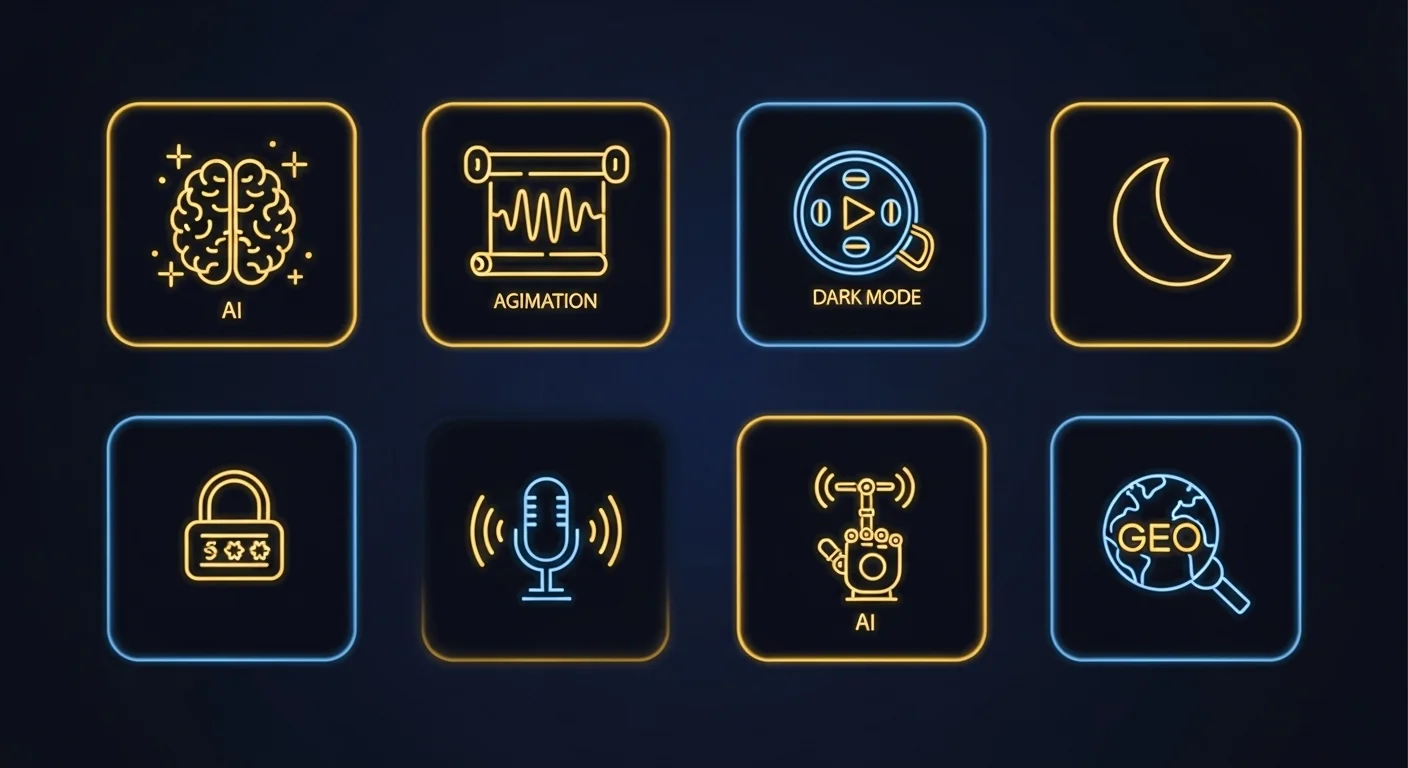
AI-Powered Personalization
Portfolio websites are now using AI to dynamically present the most relevant work to each visitor based on their industry, behavior, and referral source. A visitor arriving from a fashion brand’s website sees fashion-related projects first: while a tech startup visitor sees product design work prioritized.
Generative Engine Optimization (GEO)
The brands and companies that win in 2026 will not simply optimize for keywords; they will optimize for authority, structure, and discoverability across answer engines. Portfolio professionals must structure their content so that AI platforms like ChatGPT, Claude, and Perplexity can understand, reference, and recommend their work.
Scroll-Triggered Animations and Micro-Interactions
Smooth, purposeful animations that respond to user scrolling and interaction create memorable, immersive portfolio experiences. When implemented correctly: without sacrificing performance: they demonstrate technical sophistication and creative attention to detail.
Video-Led Case Studies
Written case studies are being supplemented and in some cases replaced by short, compelling video walkthroughs of projects. A 60 to 90 second process video on each project page communicates your thinking, personality, and results far more effectively than text alone.
Dark Mode and Bold Typography
Clean, editorial design with strong typographic hierarchy and optional dark mode is the defining aesthetic of high-end portfolios in 2026. Bold, confident typography communicates authority: while dark mode offers an alternative visual experience increasingly preferred by creative audiences.
Password-Protected Client Work Sections
Many professionals work on confidential projects that cannot be shown publicly. A password-protected section of the portfolio: accessible to serious prospects upon request: allows professionals to showcase NDA-protected work selectively without compromising client relationships.
Voice Search Optimization
In 2026, users prefer speaking their queries rather than typing them, creating a shift toward conversational search patterns: optimizing content for long-tail keywords and conversational phrases that reflect how people speak in real life is essential. Portfolio FAQs and About pages optimized for voice queries are increasingly important.
AI-Generated Work Showcasing
The fastest growing portfolio category in 2026 is AI-powered creative work: AI image generation, AI video production, AI copywriting, and AI-assisted design. Professionals who can demonstrate mastery of AI tools alongside traditional skills are commanding premium rates and attracting the most innovative clients.
13. Why Choose ZNT Solutions for Your Portfolio Website?
At ZNT Solutions, we build high-performance portfolio websites that do far more than look impressive: they rank on Google, attract the right clients, and actively grow your professional reputation and income.
What We Deliver
Custom Portfolio Website Design We build fully custom, brand-aligned portfolio websites that reflect your unique creative identity and make an unforgettable first impression on every potential client who visits.
SEO-Optimized Development Every portfolio website we build is engineered for search visibility from day one: clean semantic code, keyword-optimized page structure, fast loading speed, proper schema markup, and complete on-page SEO across every project page and case study.
Case Study Page Development We design and build compelling individual project and case study pages for every piece in your portfolio: ensuring Google can index your work and potential clients can understand the full depth of your expertise.
Mobile-First Development Every portfolio we build delivers a flawless, fast-loading experience on all smartphones, tablets, and desktop devices: because the majority of your potential clients are browsing on mobile.
Blog and Content System Integration We include a fully integrated blog and content management system with every portfolio we build: giving you the platform to publish SEO-driven content that attracts consistent organic traffic to your work.
WhatsApp and Contact Integration We integrate WhatsApp Business and strategic contact forms throughout your portfolio to maximize the number of client inquiries your website generates every day.
Ongoing Support and Maintenance Your portfolio website requires regular updates, performance optimization, and security monitoring. ZNT Solutions provides dedicated ongoing support to keep your portfolio performing at its absolute best.
Full Digital Marketing Services We do not just build your portfolio: we help grow your audience through it. Our digital marketing services include SEO, social media marketing, content creation, and AI-powered image and video creation to amplify your professional presence online.
14. Frequently Asked Questions
Q: How long does it take to build a professional portfolio website? A: A professionally designed portfolio website typically takes 2 to 4 weeks for a standard project. A complex agency portfolio with custom animations, multi-language support, and advanced case study pages can take 6 to 10 weeks depending on scope.
Q: Do I need a custom portfolio website or can I use a template? A: Both are valid options. A premium template delivers professional results quickly and at lower cost. However, a custom-built portfolio provides a unique design, superior performance, stronger SEO control, and a presentation that itself demonstrates your or your agency’s standards.
Q: What is the best platform for a portfolio website in 2026? A: WordPress is the best platform for most professionals due to its superior SEO capabilities and content management flexibility. Webflow is excellent for design-focused portfolios. Custom React or Next.js is ideal for developers who want their portfolio to showcase their technical skill directly.
Q: How much does a portfolio website cost in Pakistan? A: A professional portfolio website developed by ZNT Solutions starts from PKR 120,000 for a complete custom solution. The investment varies based on the number of projects showcased, case study complexity, blog integration, and additional features.
Q: How can my portfolio website attract clients through Google? A: With a proper SEO strategy including keyword-optimized project pages, case studies with written descriptions, a regularly updated blog, local SEO targeting, and proper schema markup: your portfolio can rank for the specific search queries your ideal clients use when looking for someone with your skills.
Q: Can my portfolio website work on smartphones? A: Yes. Every portfolio website built by ZNT Solutions is fully mobile-responsive: delivering a perfect experience on all smartphones, tablets, and desktop devices.
Q: Should I include a blog on my portfolio website? A: Absolutely. A blog is one of the most powerful SEO and credibility tools available to any professional. It attracts organic search traffic, demonstrates your expertise, and keeps your website fresh with new content that Google rewards with improved rankings.
Q: How do I protect confidential client work on my portfolio? A: We can implement a password-protected section of your portfolio for NDA-protected or confidential work: allowing you to share this content selectively with serious prospects while keeping it private from the general public.
Q: Can ZNT Solutions help me get more clients through my portfolio? A: Yes. Beyond building your portfolio, we offer SEO services, social media marketing, Google Ads management, and AI-powered content creation specifically designed to drive qualified traffic to your portfolio and convert visitors into paying clients.
Q: Do you provide website maintenance after the portfolio is launched? A: Yes. ZNT Solutions offers dedicated ongoing maintenance and support packages to keep your portfolio website secure, fast, and fully updated long after launch.
Final Thoughts
A professionally developed portfolio website is the single most impactful investment any creative professional, freelancer, or agency can make in their career or business in 2026. It is your most credible proof of work, your most powerful marketing tool, and your most effective client acquisition system: all operating continuously without any additional effort from you.
The creative and professional marketplace has never been more competitive. Professionals with fast, beautifully designed, SEO-optimized portfolio websites consistently attract better clients, command higher rates, and build stronger reputations than those relying on social media profiles or outdated websites alone.
Ready to build a portfolio website that wins clients and ranks on Google?
At ZNT Solutions, we combine expert web development, strategic SEO, and conversion-focused design to build portfolio websites that deliver real, measurable results for professionals across Pakistan and beyond.
📞 Contact ZNT Solutions today for a free consultation and let us build the portfolio website your work deserves.
This blog is published by ZNT Solutions: a leading web development and digital marketing agency offering SEO, web development, social media marketing, and AI-powered content creation services for businesses and professionals across Pakistan.