

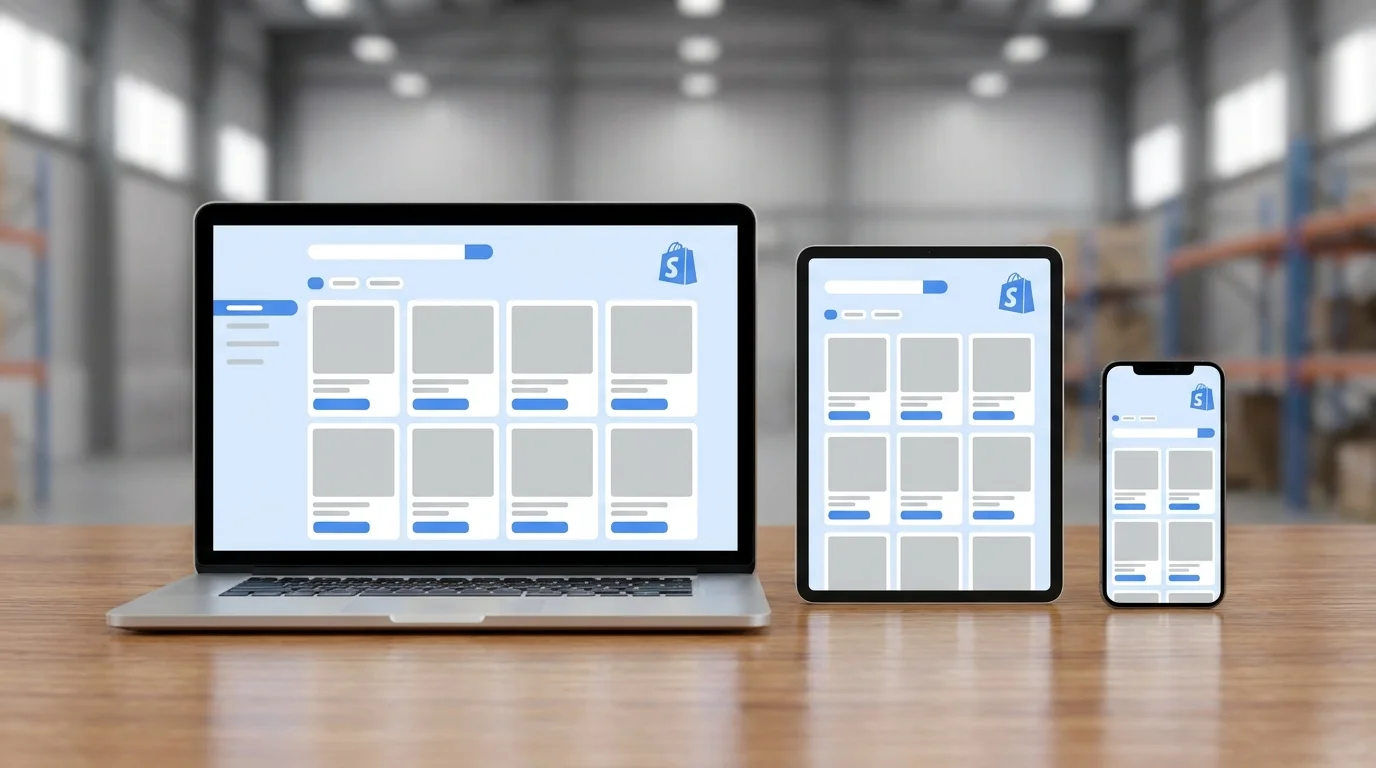
1. Why Shopify Is the Best Ecommerce Platform in 2026?
In 2026, selling online is not a luxury: it is the primary growth channel for businesses of every size, from solo entrepreneurs to global brands. And when it comes to building a powerful, scalable, and profitable online store, Shopify stands above every other platform as the clear choice for serious sellers.
Shopify powers roughly 30% of all ecommerce websites in the United States alone, making organic search one of the most competitive arenas for online merchants. The businesses that win are the ones with professionally developed, SEO-optimized Shopify stores that are built to convert visitors into customers from day one.
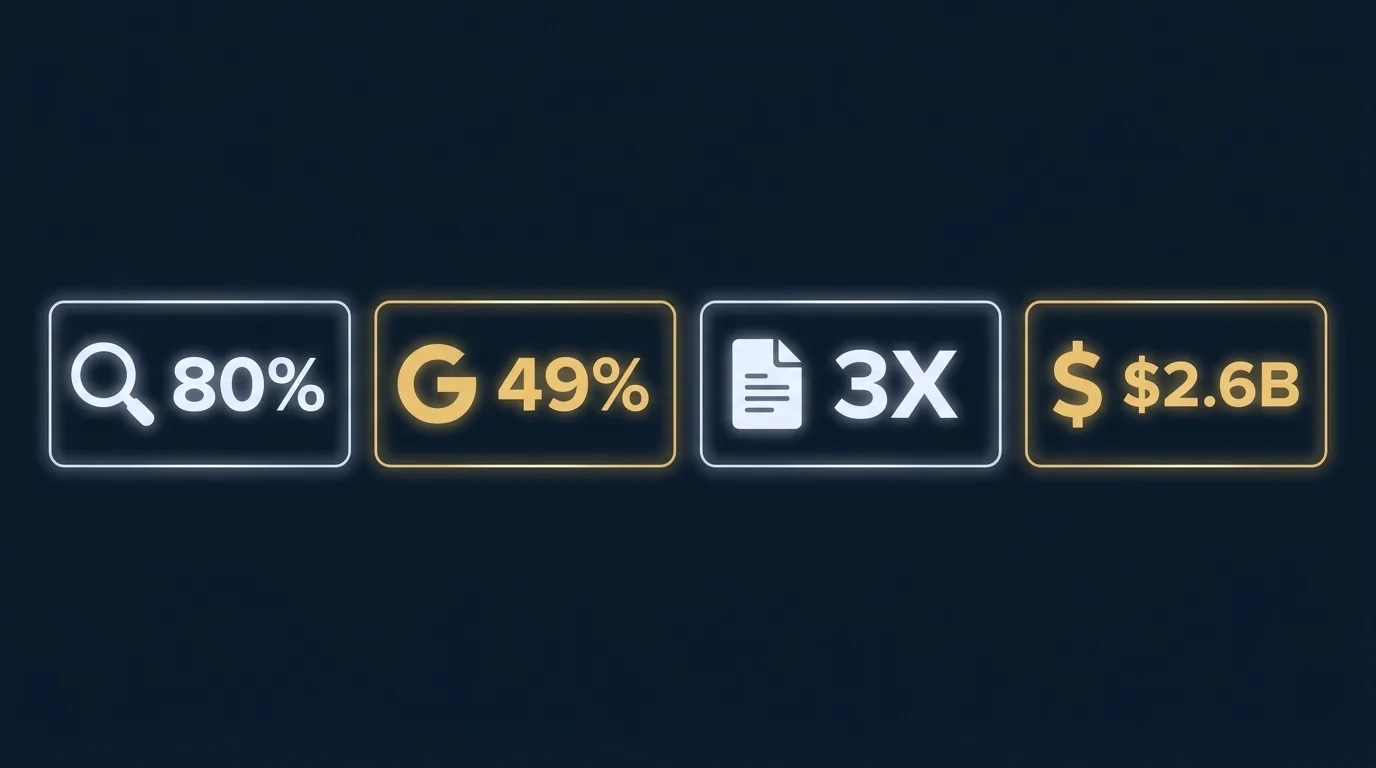
Here are the numbers that prove why Shopify dominates in 2026:
- Over 80% of online shoppers do product research online before making a purchase, with the majority turning to Google first
- 49% of customers begin their product search on Google: that is almost half of all potential buyers searching for products exactly like yours
- Stores with active blogs typically see 2 to 3 times more organic traffic than stores without them
- Slow-loading websites cost businesses over $2.6 billion in revenue loss annually: speed is not optional; it is a direct revenue factor
- Shopify powers roughly 30% of U.S. ecommerce websites, making it the most trusted and widely used ecommerce platform in the world
A professionally built Shopify store works for your business every hour of every day: attracting customers from Google, converting visitors into buyers, processing payments securely, and managing orders automatically, all while you focus on growing your brand.
💡 Key Insight: In 2026, Google’s AI-driven algorithms evaluate topical authority, page speed, structured data, and user experience as interconnected ranking signals. A beautifully designed Shopify store without proper SEO and technical optimization is invisible to the customers who matter most.
2. What Is a Shopify Store?
A Shopify store is a professionally built ecommerce website hosted on Shopify’s platform: one of the world’s most powerful, reliable, and merchant-friendly ecommerce solutions. It allows businesses to sell physical products, digital downloads, subscriptions, and services online, with built-in tools for inventory management, payment processing, shipping, and marketing.
Unlike building a website from scratch, Shopify provides a complete ecommerce infrastructure, so businesses can focus on their products and customers rather than technical server management.
A high-performance Shopify store includes:
- A compelling Homepage that immediately communicates your brand, bestsellers, and value proposition
- Optimized Collection pages that organize your products into clear, searchable categories
- Conversion-focused Product pages with rich descriptions, high-quality images, reviews, and clear purchase buttons
- A seamless Checkout experience with multiple payment options and minimal friction
- An integrated Blog for content marketing and SEO-driven organic traffic
- Trust pages: About Us, Contact, FAQ, Shipping Policy, and Returns Policy
- Email and WhatsApp marketing integration for customer retention and repeat sales
- A fully mobile-optimized experience for the majority of shoppers browsing on smartphones
A well-built Shopify store is not just an online product catalog: it is a complete, automated sales machine that drives revenue around the clock.
3. Types of Shopify Stores
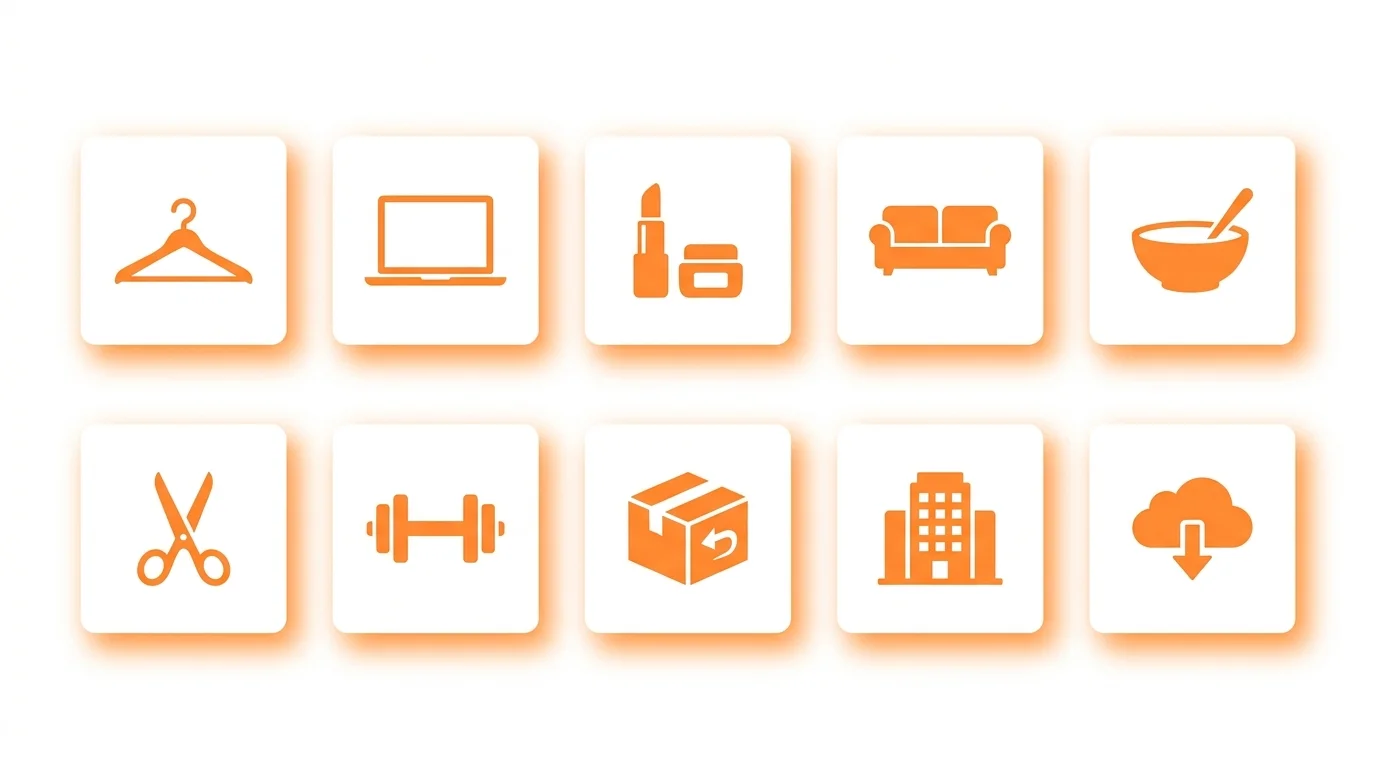
Shopify serves an extraordinarily diverse range of businesses. Here are the main types of Shopify stores:
Fashion and Apparel Store
One of the most popular Shopify categories. Features size guides, color variant selectors, lookbook galleries, style guides, and outfit inspiration content. Strong visual branding and fast image loading are essential.
Electronics and Technology Store
Sells gadgets, accessories, components, and tech products. Requires detailed specification tables, comparison features, compatibility guides, and robust warranty and returns policies.
Beauty and Skincare Store
Features ingredient-focused product descriptions, skin type filters, routine guides, before-and-after imagery, and user-generated content. The most effective content types for Shopify stores in this niche include buying guides such as “Best Vitamin C Serums for Sensitive Skin in 2026” and comparison articles such as “Niacinamide vs. Hyaluronic Acid: Which One Do You Need?”
Home and Lifestyle Store
Showcases furniture, decor, kitchenware, and home accessories with lifestyle photography, room inspiration galleries, and interior styling guides.
Food and Grocery Store
Offers packaged foods, specialty ingredients, organic products, and meal kits. Requires clear ingredient lists, allergen information, freshness guarantees, and fast local delivery options.
Handmade and Artisan Store
Ideal for independent creators and craft sellers. Features the maker’s story, custom order options, behind-the-scenes process content, and a strong brand personality.
Sports and Fitness Store
Sells equipment, apparel, supplements, and accessories. Features workout guides, product comparison tools, athlete testimonials, and fitness content that drives organic search traffic.
Dropshipping Store
A business model where the seller lists products without holding inventory: orders are fulfilled directly by the supplier. Requires careful product page optimization, reliable supplier integration, and strong customer service systems.
Wholesale and B2B Store
Shopify Plus supports wholesale pricing, volume discounts, customer-specific catalogs, and dedicated wholesale portals for business buyers.
Digital Products and Course Store
Sells ebooks, templates, courses, software, and other downloadable products. Requires digital delivery automation, license management, and content protection features.
4. Must-Have Features of a Shopify Store
Building a competitive Shopify store in 2026 requires much more than adding products and choosing a theme. Here are the essential features every high-performing Shopify store must have:
Fast Loading Speed
Slow-loading websites cost businesses over $2.6 billion in revenue loss annually: people do not want to wait for your website to load to get information, see your products, or complete a purchase. Every page of your Shopify store must load in under 3 seconds on mobile devices.
Mobile-First Responsive Design
The majority of ecommerce traffic comes from smartphones. Your Shopify store must deliver a flawless, intuitive shopping experience on every mobile device: from product browsing to checkout completion.
High-Quality Product Photography and Video
Customers cannot touch your products online. Professional, high-resolution product images from multiple angles, lifestyle shots, and product demonstration videos are your most powerful sales tools.
Detailed and SEO-Optimized Product Pages
Product pages are the core of your Shopify store: optimizing them properly can significantly improve your search rankings. Each page needs a unique product title with keywords, a detailed product description, high-quality images with alt text, clear pricing and availability, and customer reviews.
Customer Reviews and Social Proof
Product reviews are conversion-boosting factors for any online store: they act as social proof for customers and help them feel confident in your store and products. Display authentic reviews prominently on every product page.
Multiple Payment Options
Customers expect to pay their preferred way. Integrate Shopify Payments, PayPal, credit and debit cards, Apple Pay, Google Pay, and for Pakistani customers: JazzCash and Easypaisa.
Abandoned Cart Recovery
The majority of shoppers who add products to their cart do not complete the purchase. Automated abandoned cart email and WhatsApp sequences recover these lost sales automatically.
Secure Checkout with SSL
Every Shopify store includes SSL encryption by default: ensuring your entire store runs on HTTPS and displaying trust badges at checkout is essential for converting hesitant buyers.
Smart Search Bar with Autocomplete
A powerful onsite search tool helps customers find exactly what they are looking for in seconds. Smart autocomplete, typo correction, and filter-based results dramatically improve the shopping experience and conversion rates.
Inventory and Order Management
Real-time inventory tracking, low stock alerts, automated order confirmation emails, and shipping notification systems are essential for managing customer expectations and operational efficiency.
Trust Pages: About, FAQ, Shipping, and Returns
Every Shopify store needs certain pages to establish trust with both visitors and search engines: an About page that tells your story; a Contact page that makes you reachable; an FAQ page that answers common questions and targets long-tail keywords; and Shipping and Returns policies that reduce purchase anxiety.
Email and WhatsApp Marketing Integration
Build your customer email list from day one. Integrate Klaviyo, Mailchimp, or Shopify Email for automated welcome sequences, promotional campaigns, product launches, and post-purchase follow-ups. In Pakistan, WhatsApp Business integration is equally important for direct customer communication.
5. Shopify Store Design Best Practices
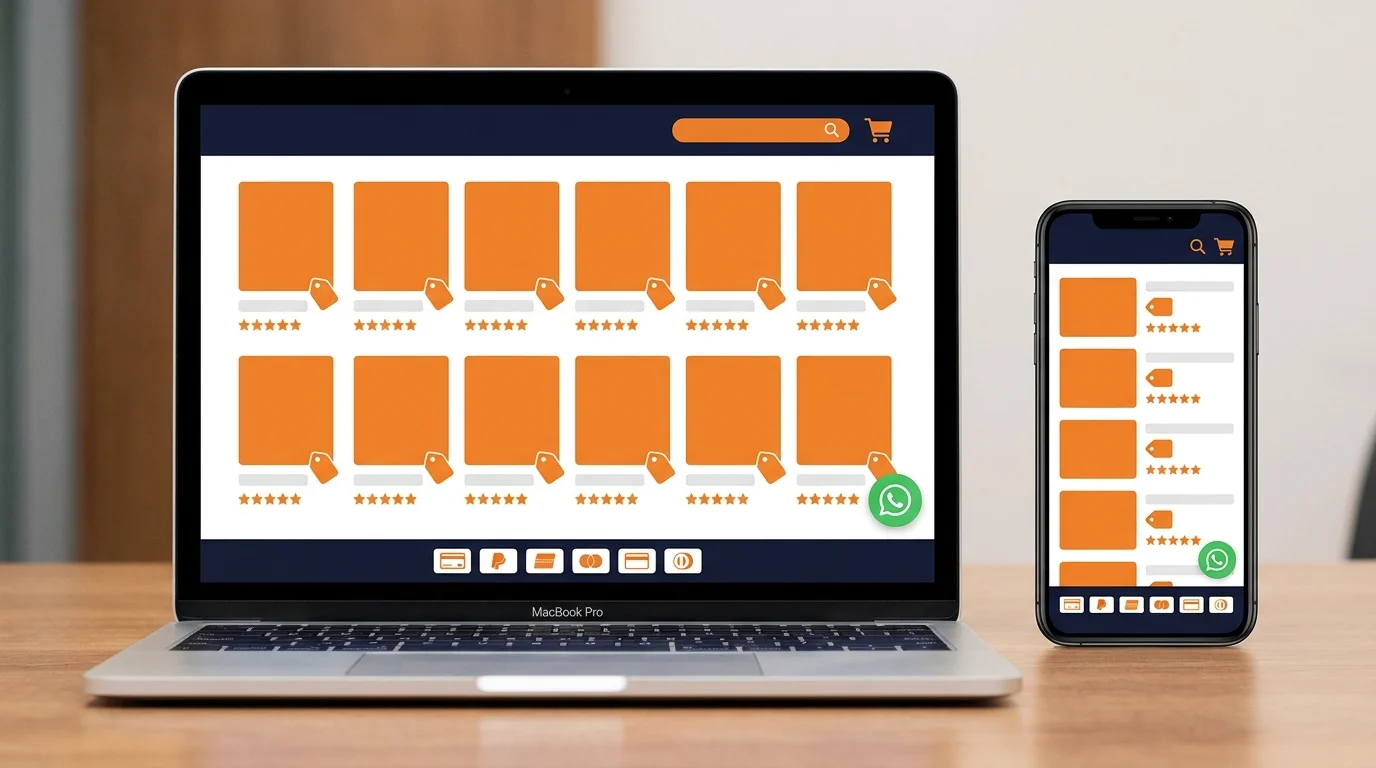
Your Shopify store’s design is your brand’s first impression, and in ecommerce, first impressions determine whether a visitor buys or leaves.
Choose a Theme That Reflects Your Brand
Shopify offers hundreds of professionally designed themes, both free and premium. Choose a theme that aligns with your product category, brand aesthetic, and target audience. A luxury brand needs a clean, minimal theme, while a playful children’s brand needs color, energy, and personality.
Design Your Homepage for Immediate Clarity
Your homepage must answer three questions within the first 3 seconds: What do you sell? Who is it for? Why should I trust you? Use a strong hero banner, a clear headline, featured product collections, and social proof elements above the fold.
Use Consistent Visual Branding
Consistent colors, fonts, logo placement, and photography style across every page of your store builds brand recognition and professional credibility. Inconsistency signals amateurism and undermines customer trust.
Make Navigation Simple and Intuitive
Customers should find any product in 3 clicks or fewer. Use clear collection categories in your navigation menu, a prominent search bar, and logical breadcrumb trails on product and collection pages.
Prioritize Product Imagery
In ecommerce, your product images are your most important conversion asset. Use high-resolution photography on white and lifestyle backgrounds, enable image zoom, show all color and style variants, and include video wherever possible.
Design for Trust at Every Step
Display trust signals throughout the shopping journey: security badges at checkout, money-back guarantee seals, free shipping thresholds, real customer reviews with photos, and clear and prominent return policies.
Optimize Your Call-to-Action Buttons
Your “Add to Cart” and “Buy Now” buttons must stand out visually on every product page. Use contrasting colors, clear action language, and prominent placement: never make a customer search for how to complete a purchase.
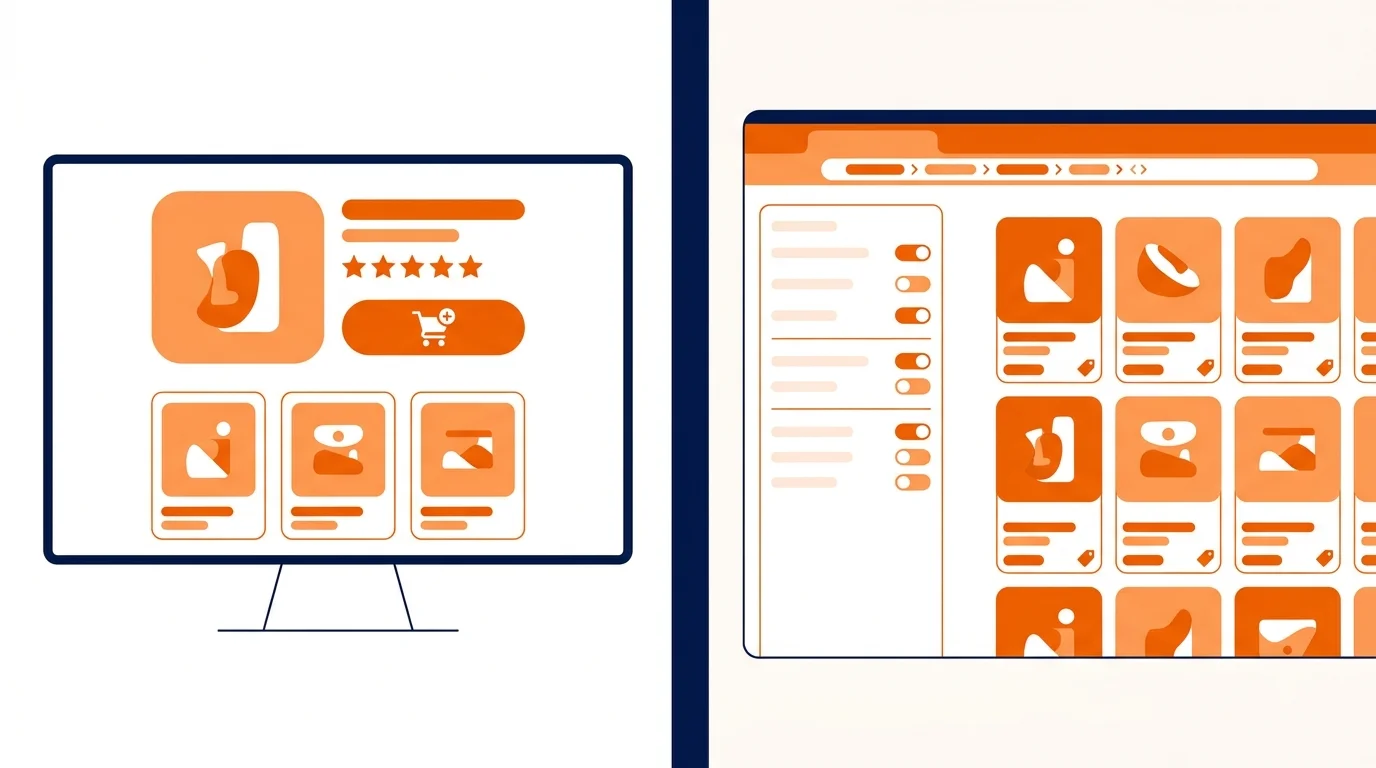
6. Shopify Product and Collection Page Optimization
Product and collection pages are where your Shopify store’s revenue is generated. Optimizing them for both conversion and SEO is the most impactful work you can do on your store.
Product Page Optimization
Product Title: Include your primary keyword naturally in the product title. Keep it descriptive, specific, and searchable: for example, “Men’s Premium Leather Wallet, Slim Bifold, Brown” rather than simply “Brown Wallet.”
Product Description: Write unique, compelling descriptions for every product. Avoid copying product descriptions from suppliers: duplicate content can negatively impact your SEO. Describe the product’s key features, materials, dimensions, use cases, and benefits in clear and engaging language.
Product Images: Use descriptive file names and keyword-rich alt text for every product image. For example: “mens-slim-leather-wallet-brown-pakistan.jpg” rather than “IMG_4521.jpg.”
Customer Reviews: Display verified reviews on every product page. Encourage customers to leave reviews after purchase through automated email follow-ups.
Related Products: Show related and complementary products on every product page to increase average order value through cross-selling and upselling.
Collection Page Optimization
Well-optimized collections act as category hubs, supporting internal linking, keyword targeting, and user navigation. For many stores, collection pages drive more organic traffic than individual product pages.
Collection Title and Description: Add a keyword-rich title and a short descriptive paragraph at the top of every collection page. This text is indexed by Google and helps the collection rank for category-level search queries.
URL Structure: Keep collection URLs clean, short, and keyword-rich. Use intent-based structures like /collections/mens-leather-wallets rather than generic or auto-generated slugs.
Internal Linking: Link from collection pages to related collections and from product pages back to their parent collections. This creates a logical site structure that both users and search engines navigate easily.
Filters and Sorting: Implement useful product filters: by size, color, price, material, and rating. Clear filtering significantly improves the shopping experience and reduces bounce rate.
7. SEO for Shopify Stores
Search engines remain the primary discovery channel for ecommerce, and Shopify SEO plays a decisive role in visibility and revenue. Google now prioritizes entity-based SEO over keyword repetition: without proper Shopify website SEO, even high-quality products struggle to appear on the first page.
Shopify SEO Keywords to Target
Product-Specific Keywords (Transactional Intent):
- buy leather wallet online Pakistan
- men’s slim leather wallet Pakistan
- organic skincare products online
- gaming laptop Pakistan buy online
- handmade jewelry Pakistan
Collection-Level Keywords (Commercial Investigation Intent):
- best leather wallets for men 2026
- organic skincare products collection
- gaming laptops under 100000 Pakistan
- handmade silver jewelry Pakistan
Informational Keywords (Blog Content):
- how to choose the right leather wallet
- best skincare routine for oily skin 2026
- gaming laptop buying guide Pakistan
- how to care for silver jewelry
Local SEO Keywords (Pakistan-Specific):
- Shopify store Pakistan
- online shopping Pakistan
- buy online Pakistan free delivery
- Shopify store development Lahore
- Shopify development agency Pakistan
Long-Tail Keywords (High Intent, Low Competition):
- best Shopify store development Pakistan
- how to build a Shopify store in Pakistan
- Shopify store development cost Pakistan
- affordable Shopify store design Lahore
- Shopify development agency Karachi
On-Page SEO for Shopify
Title Tags: Your title tag is the headline that appears in search results: it should be under 60 characters and include your primary keyword near the beginning. For a product page, a strong format is: Primary Keyword, Brand Name.
Meta Descriptions: Your meta description is the snippet of text below the title in search results: keep it under 160 characters, include your keyword naturally, and add a clear call to action.
Heading Structure: Use one H1 tag per page containing the primary keyword. Use H2 subheadings for key sections and H3 for subsections. Never use multiple H1 tags on a single page.
URL Optimization: Keep URL slugs short and keyword-rich: Shopify defaults to the product title, so clean it up by removing stop words. Example: /products/mens-leather-wallet rather than /products/mens-premium-slim-bifold-leather-wallet-brown-genuine.
Internal Linking: Your most important pages, including bestsellers and key collections, should have the most internal links pointing to them: this concentrates SEO value where it matters most.
Technical SEO for Shopify
Core Web Vitals, including Largest Contentful Paint, Interaction to Next Paint, and Cumulative Layout Shift, are confirmed ranking factors that directly affect store visibility.
Duplicate Content: Shopify generates duplicate URLs by default: a single product can appear at its canonical /products/ path and at a /collections/collection-name/products/ path. If left unaddressed, these duplicates dilute the page’s ranking signal. Verify canonical tags through Google Search Console.
Image Optimization: Compress images to optimal sizes, add descriptive image names and ALT tags, and use responsive images throughout your store. Use WebP format and lazy loading for image-heavy collection pages.
XML Sitemap: Shopify automatically generates an XML sitemap. Submit it to Google Search Console immediately after launching your store to accelerate indexing.
Schema Markup: Shopify themes often include basic product schema covering price, availability, and reviews: enhance this with apps like JSON-LD for SEO. Implement Product, Review, BreadcrumbList, and Organization schema for maximum search visibility.
Blog Content Strategy for Shopify SEO
Shopify includes a built-in blog, and if you are not using it, you are leaving enormous SEO value on the table. Blog content is how you capture informational searches, build topical authority, and attract backlinks organically.
Effective blog content types for Shopify stores include:
Buying Guides: “The Complete Guide to Choosing a Leather Wallet in 2026” targets customers in the research phase who are actively building purchase intent.
Comparison Posts: “Full Grain vs. Genuine Leather: Which Is Better?” attracts comparison searches and builds topical authority for your product category.
How-To Content: “How to Care for Your Leather Wallet” attracts existing customers, builds brand loyalty, and targets long-tail informational queries.
Product Spotlights: “5 Reasons Our Slim Wallet Is the Best Choice for Minimalist Men” targets lower-funnel searchers who are close to making a purchase decision.
Publishing consistently matters more than publishing in bursts: even one well-researched article per week builds meaningful organic momentum over a year.
8. Best Shopify Apps for Store Growth
The Shopify App Store contains thousands of applications that extend your store’s functionality. Here are the most impactful categories and recommended apps:
SEO Apps
- Plug In SEO: Discovers ways to improve your Shopify store’s SEO score and increase rankings
- SEO Manager: Manages broken links, provides keyword suggestions, and delivers analytics insights
- JSON-LD for SEO: Implements advanced schema markup for rich search results
- TinyIMG: Automates image compression and alt text optimization across your entire store
Marketing and Retention Apps
- Klaviyo: The most powerful email and SMS marketing platform for Shopify stores
- Privy: Builds email lists through popups, spin-to-win wheels, and exit-intent offers
- Omnisend: Multi-channel marketing automation covering email, SMS, and WhatsApp
- ReConvert: Post-purchase upsell and thank-you page optimization
Reviews and Social Proof Apps
- Judge.me: Collects and displays product reviews with photos and videos
- Loox: Photo and video review collection with automatic review request emails
- Yotpo: Enterprise-level reviews, loyalty programs, and user-generated content management
Conversion Optimization Apps
- Hotjar: Heatmaps and session recordings to understand visitor behavior
- Lucky Orange: Live chat, visitor recordings, and conversion analytics
- Frequently Bought Together: AI-powered product recommendation and bundling
Shipping and Fulfillment Apps
- AfterShip: Branded order tracking and shipping notification system
- Shippo: Multi-carrier shipping rate comparison and label printing
- DSers: Dropshipping automation and supplier management for AliExpress products
9. Shopify Store Cost Breakdown
Here is a transparent breakdown of Shopify store development costs in Pakistan:
Option 1: Basic Shopify Store (Theme-Based)
| Item | Cost |
|---|---|
| Shopify Basic Plan | PKR 8,000 to 12,000 per month |
| Custom Domain | PKR 2,000 to 5,000 per year |
| Premium Shopify Theme | PKR 15,000 to 50,000 (one-time) |
| Basic Setup and Configuration | PKR 30,000 to 80,000 |
| Essential Apps (Annual) | PKR 20,000 to 60,000 |
| Total First Year Estimate | PKR 170,000 to 310,000 |
Option 2: Professional Custom Shopify Store
| Item | Cost |
|---|---|
| Custom Shopify Theme Development | PKR 150,000 to 500,000 |
| Product Page and Collection Setup | PKR 50,000 to 120,000 |
| SEO Foundation Setup | PKR 40,000 to 100,000 |
| Payment Gateway Integration | PKR 20,000 to 50,000 |
| Email and WhatsApp Marketing Setup | PKR 25,000 to 60,000 |
| Quality Hosting via Shopify Plan | PKR 8,000 to 20,000 per month |
| Total Estimate | PKR 390,000 to 1,050,000 |
Option 3: Shopify Plus Enterprise Store
| Item | Cost |
|---|---|
| Shopify Plus Plan | PKR 250,000 to 300,000 per month |
| Full Custom Development | PKR 500,000 to 2,000,000 and above |
| Advanced Integrations and Automation | PKR 200,000 to 600,000 |
| Ongoing Maintenance and Optimization | PKR 50,000 to 150,000 per month |
| Total Estimate | PKR 1,000,000 and above |
💡 Pro Tip: A professionally developed Shopify store consistently delivers ROI within the first 6 to 12 months through increased organic traffic, improved conversion rates, and automated sales that run without constant manual effort.
10. How to Market Your Shopify Store
Building your Shopify store is just the beginning. Here is how to drive consistent, high-quality traffic and grow your revenue:
Search Engine Optimization (SEO)
SEO is the most sustainable, cost-effective long-term traffic source for any Shopify store. Organic SEO takes longer but delivers free traffic indefinitely: set up Google Merchant Center and run Shopping ads while building your organic presence. Over time, organic can reduce your dependence on paid advertising significantly.
Google Shopping Ads
Google Merchant Centre supports free product listings and strengthens how Google understands product data, pricing, and availability. When feeds are accurate and aligned with on-site content, Merchant Centre can improve product visibility across shopping results and image search.
Social Media Marketing
Instagram, TikTok, Facebook, and Pinterest are the most powerful discovery platforms for ecommerce products in 2026. Social media and video content is cited more frequently in Google: consider where your audience is, because they might be on TikTok, Reddit, Instagram, or YouTube, and create content to meet them there.
Email Marketing
Email marketing consistently delivers one of the highest ROI of any digital channel for ecommerce stores. Build your subscriber list from day one and deploy automated sequences for welcome emails, abandoned cart recovery, post-purchase follow-ups, and promotional campaigns.
Influencer and Creator Marketing
Partner with relevant influencers and content creators in your product niche. Micro-influencers with 10,000 to 100,000 engaged followers often deliver better conversion rates and more authentic recommendations than celebrity influencers.
WhatsApp Marketing (Pakistan-Specific)
WhatsApp remains the dominant communication channel for Pakistani consumers. Use WhatsApp Business to send order confirmations, shipping updates, promotional messages, and personalized product recommendations to your customer base.
Content Marketing and Blogging
A Shopify blog targets informational keywords that product pages cannot rank for: it builds topical authority, creates internal linking opportunities, and attracts valuable backlinks. Stores with active blogs typically see 2 to 3 times more organic traffic than stores without them.
Loyalty and Referral Programs
Implement a customer loyalty program that rewards repeat purchases with points, discounts, and exclusive offers. Referral programs that incentivize existing customers to introduce new buyers are among the most cost-effective customer acquisition strategies available.
11. Common Mistakes in Shopify Store Development
Avoid these costly mistakes that many Shopify store owners make:
❌ Copying supplier product descriptions: Duplicate content can negatively impact your SEO: avoid copying product descriptions from suppliers and always write unique, original content for every product page.
❌ Ignoring mobile optimization: The majority of ecommerce traffic comes from smartphones. A checkout process that is difficult on mobile is the single most common cause of abandoned purchases.
❌ Not using the built-in Shopify blog: If you are not using Shopify’s built-in blog, you are leaving enormous SEO value on the table: blog content is how you capture informational searches, build topical authority, and attract backlinks organically.
❌ Slow page loading speed: Installing too many unused Shopify apps is the most common cause of slow store performance. Remove every app you are not actively using and compress all product images before uploading.
❌ No customer reviews system: Stores without reviews ask customers to trust them blindly: social proof is the most powerful conversion tool in ecommerce, and its absence is immediately noticed by hesitant buyers.
❌ Poor product photography: Blurry, inconsistent, or low-quality product images are the number one reason online shoppers do not add products to their cart, regardless of price or quality.
❌ Ignoring abandoned cart recovery: The majority of shoppers who add items to their cart do not complete the purchase. Not having an automated abandoned cart recovery sequence is leaving significant revenue uncaptured every day.
❌ No trust pages: A store without an About Us page, clear returns policy, or FAQ section signals to both customers and Google that the store may not be a legitimate, trustworthy business.
❌ Not tracking analytics: Without Google Analytics 4 and Shopify’s built-in analytics, you have no visibility into which products attract the most traffic, which pages convert best, and where customers are dropping out of your funnel.
❌ Ignoring duplicate content issues: Duplicate content is one of the most common SEO challenges on Shopify: every page should have one clear H1 tag containing the primary keyword and unique, original content throughout.
12. Shopify Store Trends in 2026
The ecommerce landscape is evolving rapidly. Here are the most important trends defining high-performing Shopify stores in 2026:
AI-Powered Product Recommendations
Shopify stores are increasingly using AI to show hyper-personalized product recommendations based on browsing history, purchase behavior, and demographic signals. Stores with AI recommendation engines see significantly higher average order values and improved customer retention.
Generative Engine Optimization (GEO)
Shopify SEO in 2026 requires strategies that align with modern search behavior, AI-driven results, and buyer intent: sustainable traffic and sales require SEO that focuses on experience, relevance, and trust, not shortcuts. Optimizing for AI search platforms like ChatGPT, Claude, and Perplexity is now as important as traditional Google SEO.
Social Commerce Integration
TikTok Shop, Instagram Shopping, and Pinterest Shopping have become primary sales channels for many Shopify stores in 2026. Shopify’s native integrations with these platforms allow seamless inventory syncing, shoppable content, and in-app checkout experiences.
Video-First Product Pages
Short product demonstration videos, unboxing reels, and user-generated video reviews are now the most effective conversion tools on any product page. Shopify stores embedding authentic video content see dramatically higher engagement and purchase rates.
Subscription and Recurring Revenue Models
Subscription-based selling through Shopify is growing rapidly across all product categories: from beauty boxes and coffee subscriptions to pet food and wellness supplements. Predictable recurring revenue transforms the financial stability of any ecommerce business.
Buy Now Pay Later (BNPL) Integration
Shopify’s native integration with BNPL providers like Klarna, Afterpay, and Sezzle makes it easy to offer installment payment options at checkout. BNPL consistently increases average order values and reduces hesitation among price-sensitive buyers.
Headless Commerce and Custom Storefronts
Large-scale Shopify brands are increasingly adopting headless commerce: separating the Shopify backend from a custom-built React or Next.js frontend. This delivers blazing-fast page speeds and fully customized shopping experiences that standard Shopify themes cannot achieve.
Sustainability and Ethical Commerce
Pakistani and international consumers in 2026 are actively seeking brands that prioritize ethical sourcing, sustainable packaging, and community impact. Shopify stores that communicate these values clearly through their content and product descriptions attract a growing segment of loyal, values-driven buyers.
13. Why Choose ZNT Solutions for Your Shopify Store?
At ZNT Solutions, we build high-performance Shopify stores that do far more than look impressive: they rank on Google, convert visitors into customers, and deliver consistent, measurable revenue growth for businesses across Pakistan and beyond.
What We Deliver
Custom Shopify Store Design We build fully custom, brand-aligned Shopify stores that reflect your unique identity and make an unforgettable first impression on every potential customer who visits your store.
SEO-Optimized Development Every Shopify store we build is engineered for search engine performance from day one: clean theme code, keyword-optimized product and collection pages, fast loading speed, proper schema markup, duplicate content resolution, and complete on-page SEO setup.
Product and Collection Page Optimization We design and optimize every product page and collection page in your store to maximize both search engine rankings and customer conversion rates.
Mobile-First Development Every Shopify store we build delivers a flawless, fast-loading shopping experience across all smartphones, tablets, and desktop devices: because the majority of your customers are browsing and buying on their phones.
Payment Gateway Integration We integrate all major payment options for Pakistani and international stores: Shopify Payments, JazzCash, Easypaisa, PayPal, Stripe, and credit and debit card processing.
Email and WhatsApp Marketing Setup We configure automated email marketing sequences, abandoned cart recovery, and WhatsApp Business integration to maximize your store’s revenue from both new and returning customers.
Ongoing Support and Maintenance Your Shopify store requires regular performance optimization, app updates, and content additions. ZNT Solutions provides dedicated ongoing support to keep your store growing after launch.
Full Digital Marketing Services We do not just build your Shopify store: we help grow it. Our digital marketing services include SEO, social media marketing, Google Shopping Ads management, content creation, and AI-powered video and image creation to drive consistent traffic and sales.
14. Frequently Asked Questions
Q: How long does it take to build a professional Shopify store? A: A professionally designed Shopify store typically takes 3 to 5 weeks for a standard project. A complex store with custom theme development, large product catalogs, and advanced integrations can take 8 to 14 weeks depending on scope.
Q: Is Shopify the best ecommerce platform in 2026? A: Yes, for the majority of businesses. Shopify combines ease of use, powerful built-in ecommerce features, an extensive app ecosystem, reliable hosting, and excellent SEO capabilities. It is the platform of choice for over 30% of U.S. ecommerce websites and millions of stores worldwide.
Q: Can my Shopify store rank on Google? A: Absolutely. With the right SEO strategy, including keyword-optimized product and collection pages, an active blog, technical SEO setup, and consistent content marketing, Shopify stores can rank competitively on Google for product, category, and informational keywords.
Q: How much does a Shopify store cost in Pakistan? A: A professional Shopify store developed by ZNT Solutions starts from PKR 150,000 for a complete custom solution. The investment varies based on product catalog size, custom design requirements, app integrations, and marketing setup.
Q: Can my Shopify store accept payments in Pakistan? A: Yes. We integrate JazzCash, Easypaisa, HBL Pay, and international payment options including PayPal and Stripe, along with cash on delivery: the most trusted payment method for Pakistani online shoppers.
Q: How do I drive traffic to my new Shopify store? A: The best strategy combines SEO for long-term organic traffic, Google Shopping Ads for immediate product visibility, social media marketing on Instagram and TikTok, email marketing for customer retention, and WhatsApp marketing for direct customer communication.
Q: Will my Shopify store work on smartphones? A: Yes. Every Shopify store built by ZNT Solutions is fully mobile-responsive: delivering a perfect shopping experience on all smartphones, tablets, and desktop devices.
Q: Should I add a blog to my Shopify store? A: Absolutely. A blog is one of the most powerful SEO tools available for any Shopify store. It targets informational keywords, builds topical authority in your product niche, attracts organic backlinks, and creates internal linking opportunities that boost your entire store’s search visibility.
Q: Do you provide ongoing support after the Shopify store is launched? A: Yes. ZNT Solutions offers dedicated ongoing maintenance and support packages to keep your Shopify store fast, secure, and fully optimized long after launch.
Q: Can ZNT Solutions help me market my Shopify store? A: Absolutely. Beyond building your store, we offer comprehensive digital marketing services including SEO, Google Shopping Ads, social media marketing, content creation, and AI-powered video and image production to drive consistent traffic and sales to your Shopify store.
Final Thoughts
A professionally developed Shopify store is the single most powerful investment any ecommerce business can make in 2026. It is your 24/7 automated sales machine, your brand’s most credible online presence, and your most scalable revenue channel: all built on the world’s most trusted ecommerce platform.
The stores that dominate search results in 2026 are not those that followed a checklist once: they are the ones who built SEO into their daily operations, publishing helpful content consistently, fixing technical issues proactively, earning backlinks authentically, and always asking how they can deliver more value to their customers.
Ready to build a Shopify store that ranks on Google and converts visitors into loyal customers?
At ZNT Solutions, we combine expert Shopify development, conversion-focused design, and proven SEO strategy to build stores that deliver real, measurable results from day one.
📞 Contact ZNT Solutions today for a free consultation and let us build the Shopify store your business deserves.
This blog is published by ZNT Solutions: a leading web development and digital marketing agency offering SEO, Shopify store development, social media marketing, and AI-powered content creation services for businesses across Pakistan.